How ChatGPT Decides Which Doctor to Recommend
How ChatGPT chooses doctors comes down to one thing: confidence. When a patient asks for a good cardiologist in Austin or a gynaecologist in Pune, ChatGPT does not rank a list of links the way Google does. It writes a short answer that names one to three practices, and it names only the practices whose details it can confirm in several trusted places at once. If the model cannot confirm you, it stays quiet about you. This post explains the actual decision process, step by step, so you can see where you fit.
What "recommend" actually means inside ChatGPT
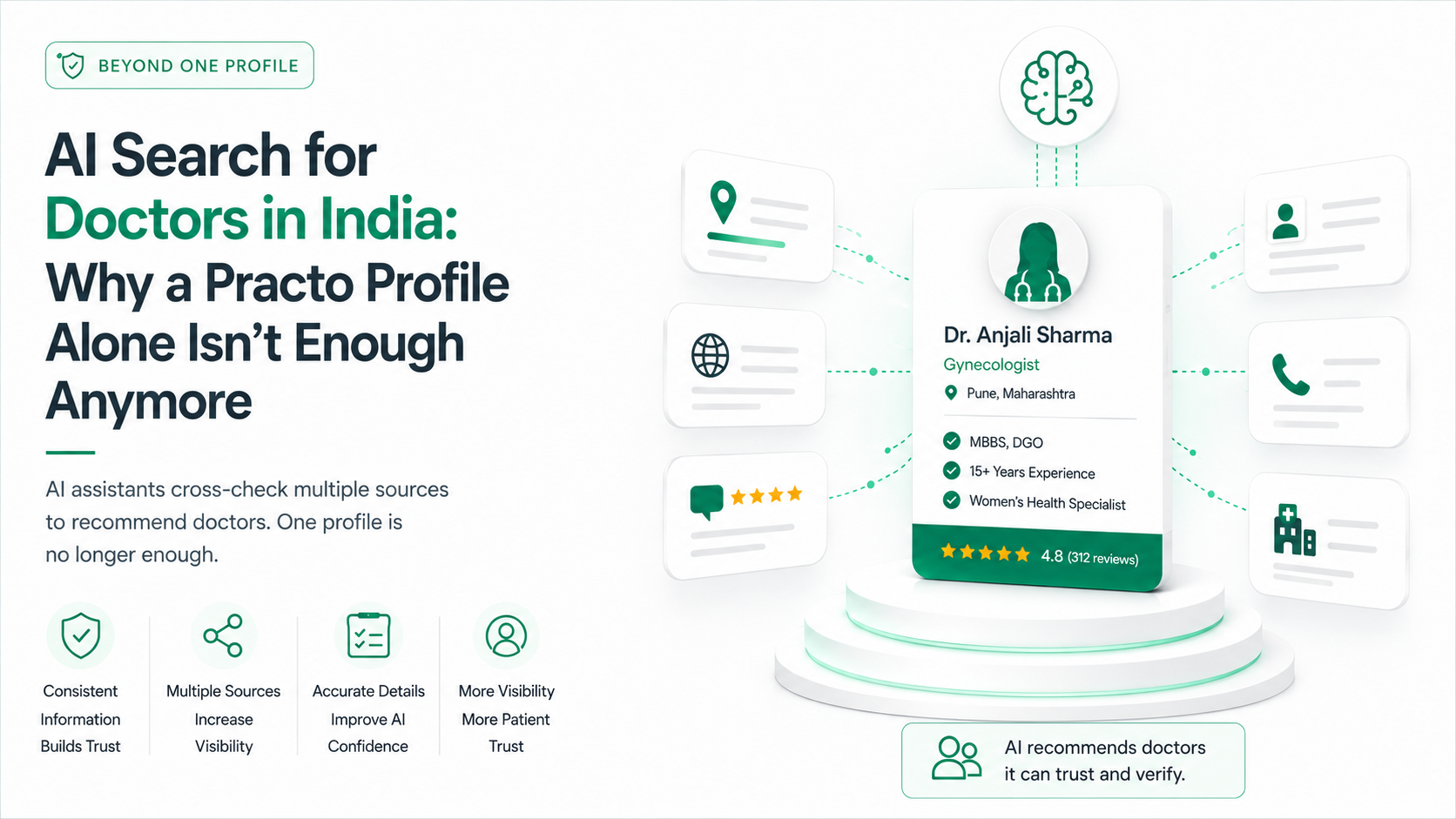
When ChatGPT recommends a doctor, it is not judging your clinical skill. It is answering a language question with the most confident, verifiable entity it can find. An entity is a specific, identifiable thing: your practice, with a name, a location, a specialty, and credentials that match across sources. A practice it can pin down in multiple places reads as safe to name. A practice it sees once, or sees inconsistently, reads as a risk, so it gets left out.
What is entity confidence
Entity confidence is how sure ChatGPT is that a named practice truly exists, matches the patient's request, and can be described accurately. It is built from repetition and agreement. When your name, address, phone number, and specialty appear identically across your website, your Google Business Profile, and several medical directories, the model treats that agreement as proof. When those details conflict, confidence drops, and a low-confidence practice is one the model would rather skip than name wrongly. Entity confidence, not review count, is the quiet variable behind most recommendations.
How ChatGPT recommends doctors: the decision in 5 steps
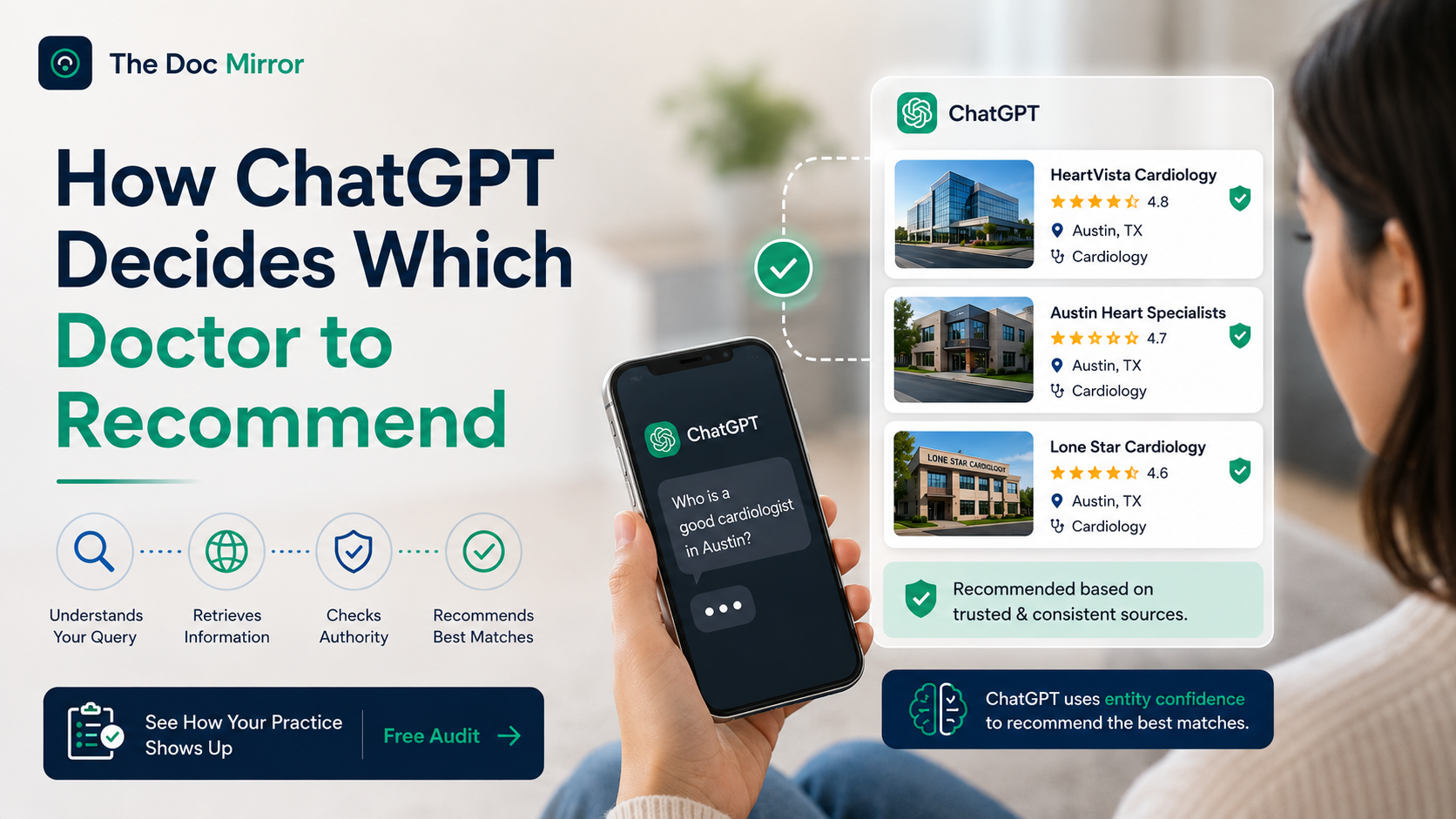
Here is how ChatGPT recommends doctors, from the moment the patient hits enter:
- It reads the query for three things: specialty, location, and intent (a second opinion reads differently from an urgent booking).
- It draws on its training data, the large body of text it learned from, to understand what a good answer looks like.
- In most current setups it also retrieves live web sources, so recent and location-specific information can enter the answer.
- It weighs the sources it finds by how authoritative and how consistent they are with each other.
- It writes a short answer naming the one to three practices it is most confident about, and often explains why.
The practices that survive to step 5 are the ones whose details agreed with each other at step 4.
Training data versus live retrieval, in plain terms
Two different mechanisms decide whether you appear. Training data is what the model absorbed during its build. It shapes general knowledge, such as which large hospital systems it already knows. Most independent doctors are too small to be memorised this way, so training data alone rarely names them.
Live retrieval is the model reading the web at the moment of the question. This is where a solo dermatologist in Denver or a small clinic in Bengaluru can win, because retrieval favours current, consistent, findable information over fame. So does ChatGPT use Google? Not directly. It uses its own search and retrieval layer, but that layer reads the same open web your Google Business Profile and directory listings sit on.
Which sources ChatGPT treats as authoritative
Not all mentions carry equal weight. The model leans on sources that are structured, widely referenced, and hard to fake. These tend to matter most:
- Medical directories with matching details. In the US that means Healthgrades, Zocdoc, Vitals, and WebMD. In India it means Practo, JustDial, Lybrate, and Apollo 247.
- Your Google Business Profile, because it is a primary, verified record of name, location, and hours.
- Your own website, especially when it carries schema markup that labels you as a medical practice rather than an unlabelled address.
- Hospital affiliation pages, specialty board listings, and reputable local coverage that reference your practice by name.
When these sources agree, the model has what it needs. When they disagree, it hedges, and hedging usually means naming someone else.
Why ChatGPT names a practice at all
The model volunteers a name because a specific, confident answer is more useful to the patient than a shrug, and it is built to be useful. The patient asked for a doctor, so a good answer is a doctor. This is why absence is expensive. About 1 in 3 US adults have now used AI chatbots for health information, according to a KFF poll, and in the rater8 2025 patient-choice report, 26% of patients said an AI tool influenced their choice of provider. When the model names one to three practices and yours is not among them, that patient rarely goes looking further.
What most doctors get wrong about ChatGPT recommendations
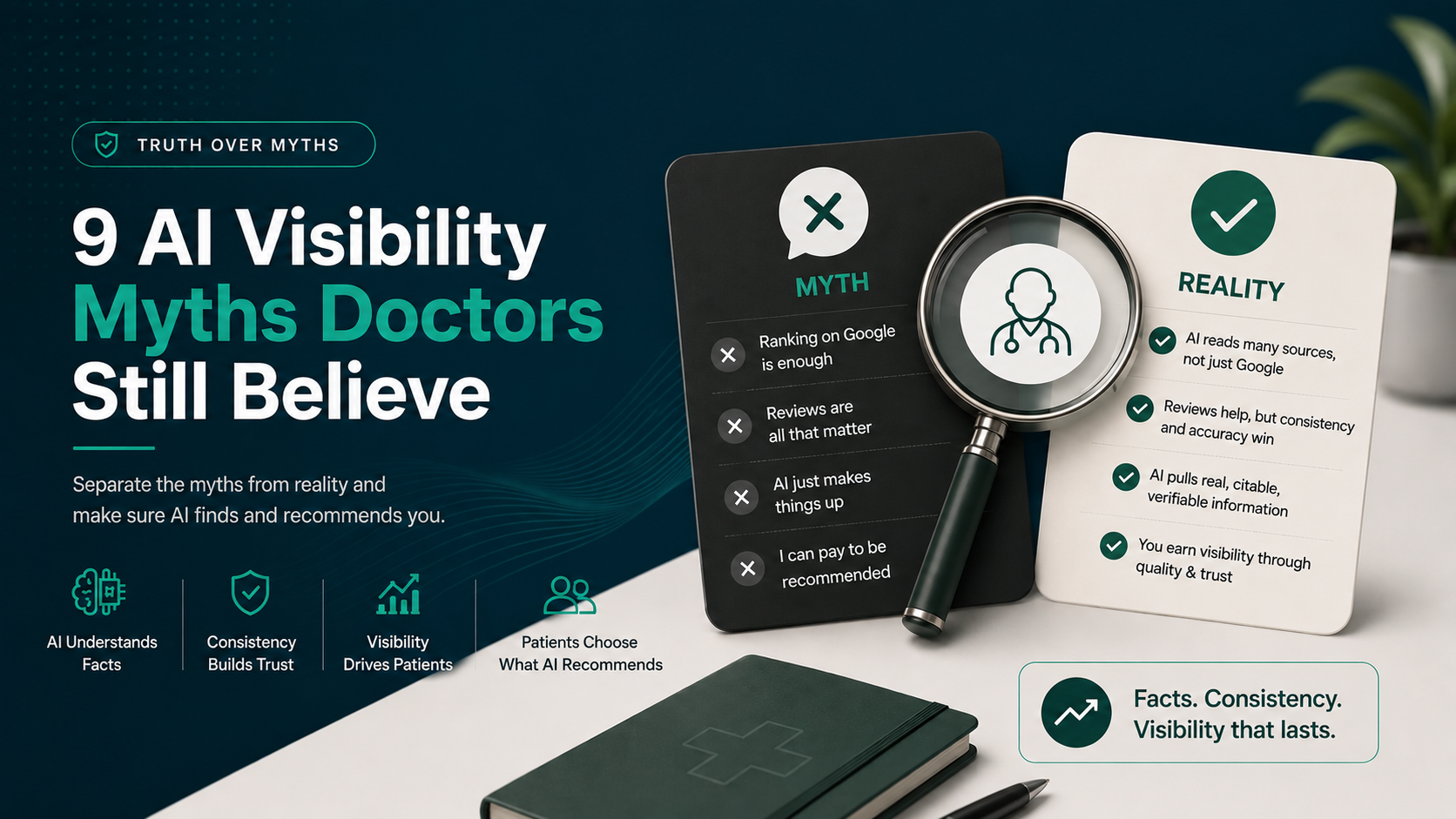
Most doctors assume the answer is about reviews or Google rank. Both help elsewhere, but neither is the deciding factor here. A cardiologist with 400 reviews can be absent from ChatGPT while a smaller practice with clean, matching listings on eight directories gets named. [Replace with your real audit figure before publishing.]
The mistake is treating AI visibility as a byproduct of SEO. It is a separate signal. ChatGPT is not counting your stars. It is checking whether your identity is consistent enough to repeat out loud. For India, this is reassuring: you do not advertise anything. You make your existing, factual information consistent and findable, which is fully within NMC norms.
How to see where you stand
You can test the mechanism yourself in a few minutes. Ask ChatGPT for the best [your specialty] in [your city], and note whether you appear and how you are described. Then check whether your name, address, and phone read identically across your directories and your Google Business Profile. If the fixes look larger than a quick edit, our companion guide on why ChatGPT does not mention your clinic walks through the corrections, and the AI visibility pillar for doctors shows how all the signals fit together across ChatGPT, Gemini, Claude, and Perplexity.