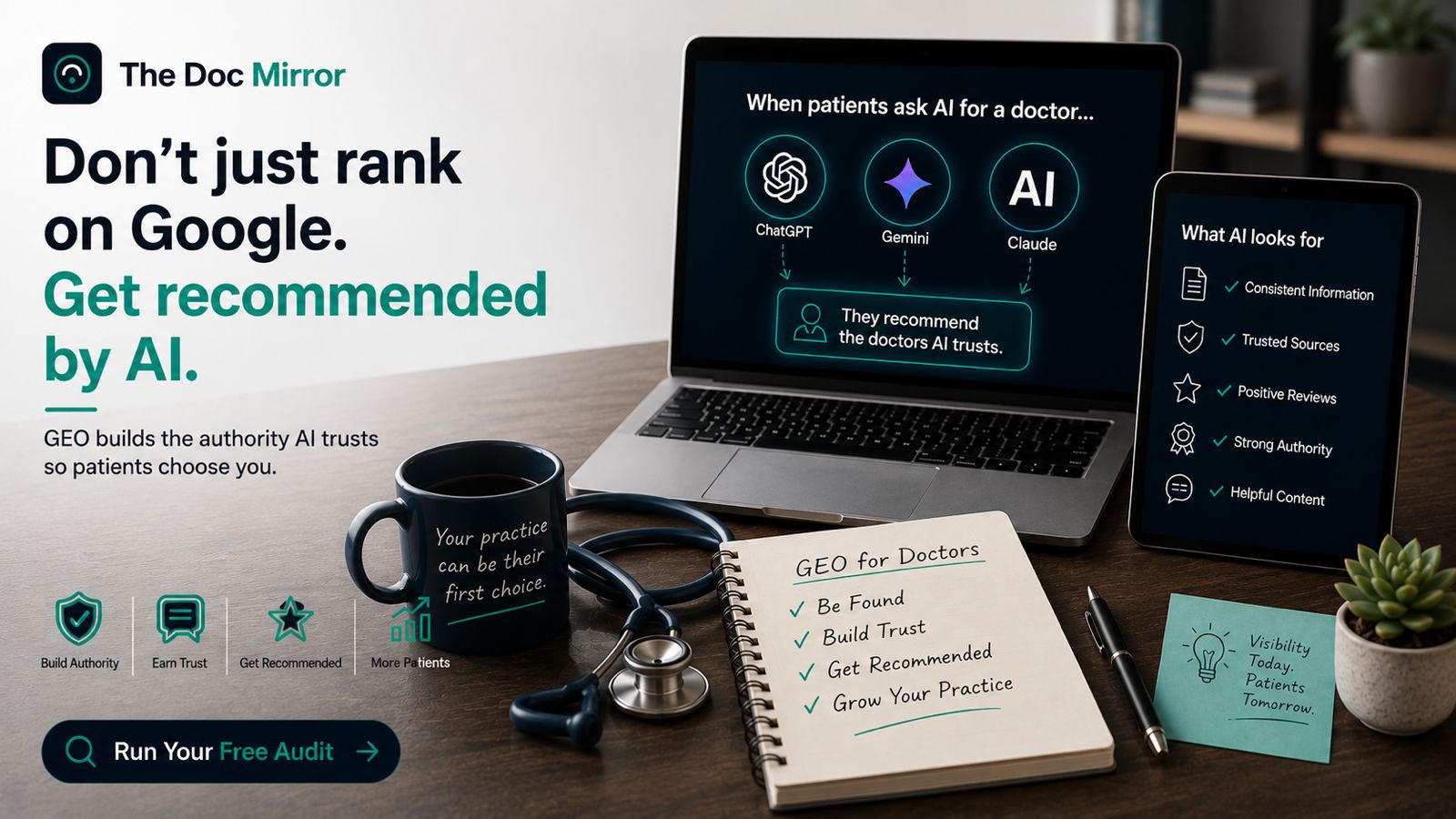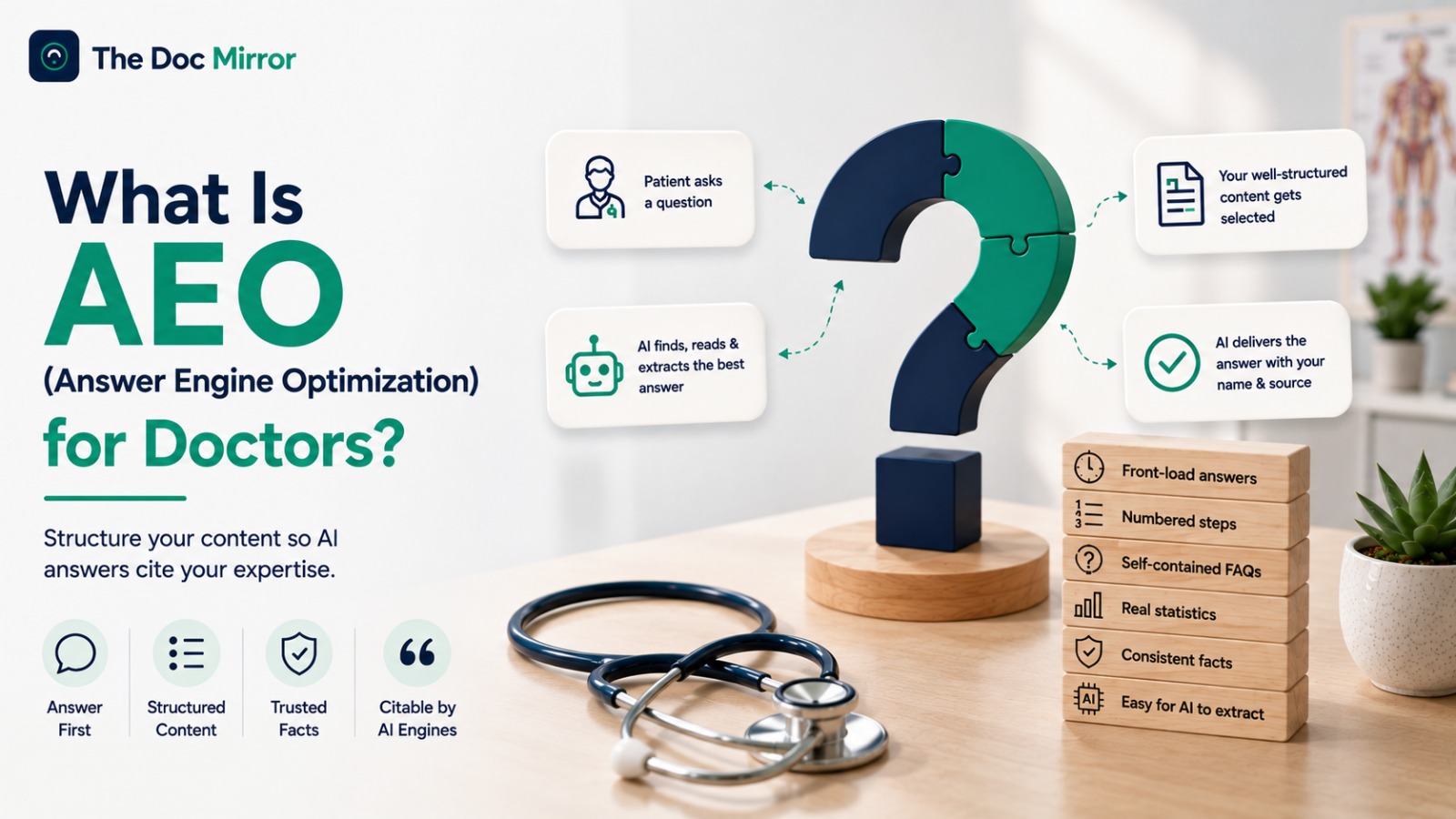
Patients no longer start every search on Google. A growing share open ChatGPT, Gemini, or Claude and ask, in plain language, "who is a good dermatologist near me?" If the AI does not know your name, you are invisible to that patient — no matter how good your website is.
Why AI visibility is different from SEO
Classic SEO optimizes for a ranked list of links. AI visibility optimizes for whether a model recommends you by name inside a written answer. The mechanics are related but not identical.
- SEO rewards on-page keywords, backlinks, and crawlability.
- AI visibility rewards being a well-established, well-cited entity across the sources models trust.
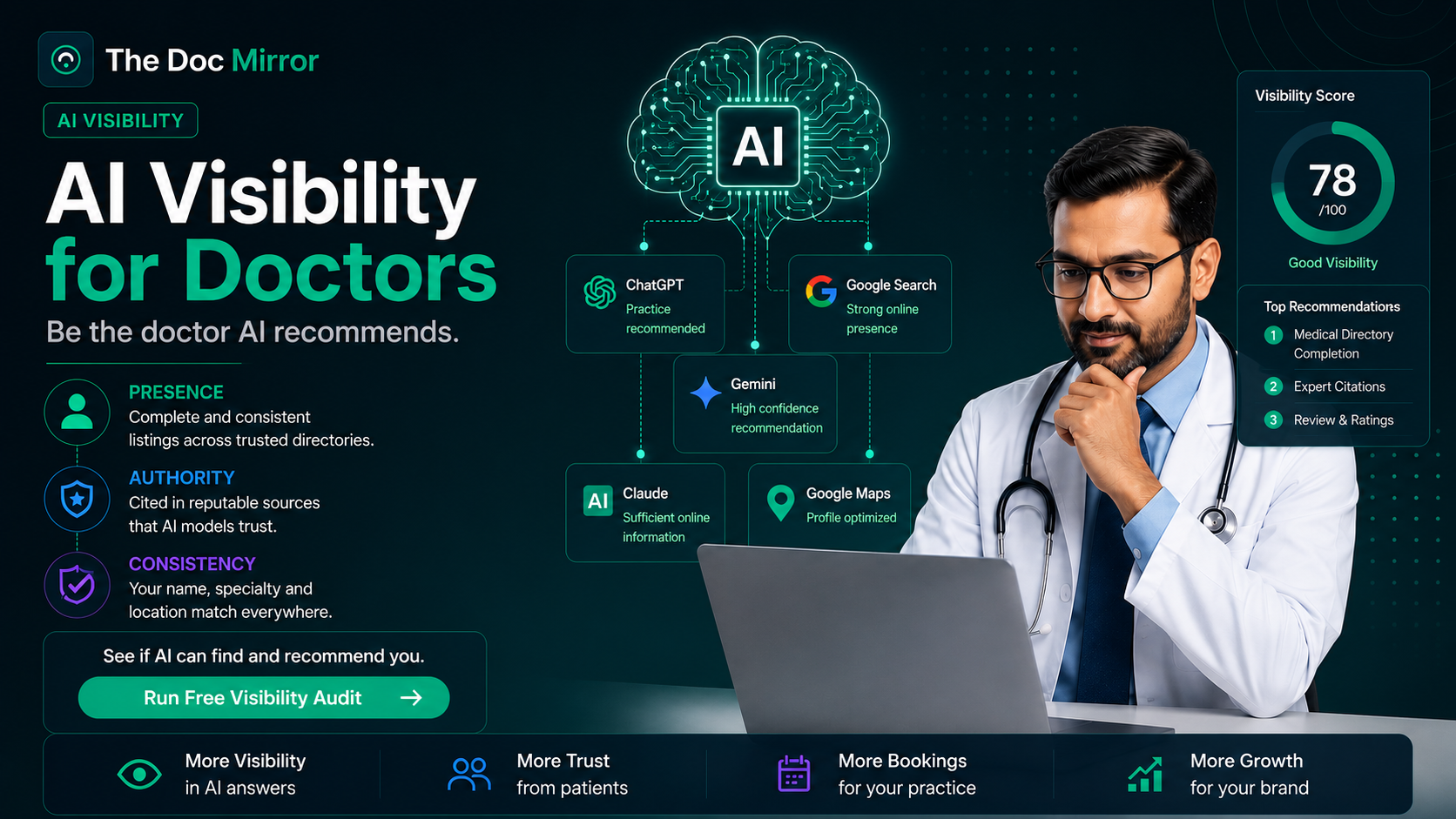
The three pillars of AI visibility
1. Presence
Are you listed, completely and consistently, on the directories AI models are trained on? Incomplete or conflicting listings weaken your entity.
2. Authority
Are you cited in content the model considers trustworthy — medical publishers, news outlets, journals, hospital pages?
3. Consistency
Do your name, specialty, and location match everywhere? Conflicting facts make a model less confident, and less confident means less likely to recommend.
A simple self-check
- Open ChatGPT and Gemini.
- Ask each for the best doctor in your specialty and city.
- Note whether you appear, and who does.
- Repeat for two or three nearby cities.
If competitors appear and you do not, the gap is almost always in presence and citations — not in the quality of your care.
Where to focus first
For most practices, the fastest wins come from completing the Big-5 healthcare directories and earning two or three expert citations. The Doc Mirror measures exactly where you stand across Google and AI, then hands you a prioritized action plan.