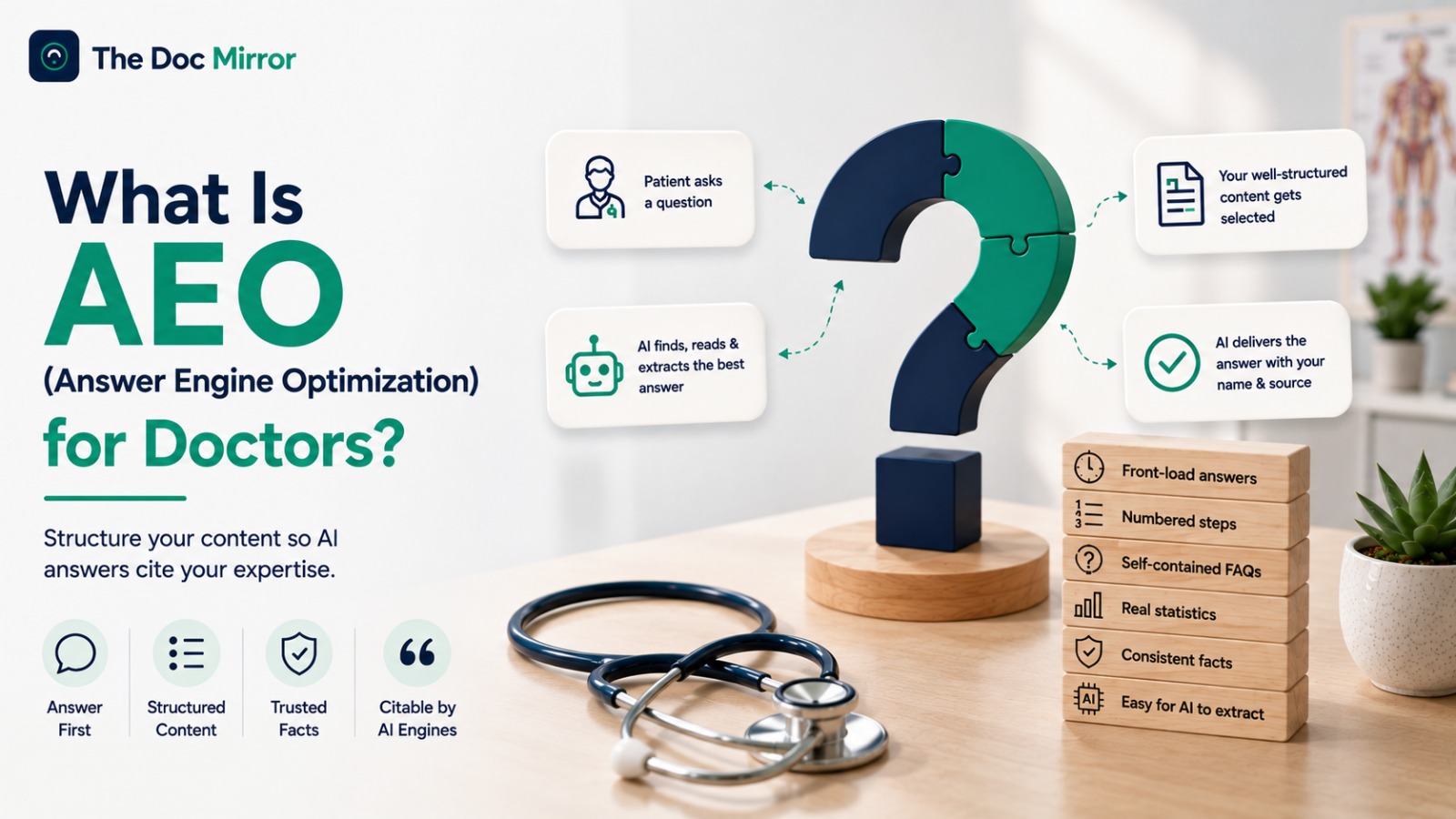
AEO for doctors means structuring your content so an answer engine can lift a clean, correct answer straight out of your page and hand it to a patient. AEO stands for Answer Engine Optimization. When a patient in Austin asks ChatGPT "is a root canal painful?" or a patient in Pune asks Gemini "when should I see a cardiologist for chest pain?", the AI does not rank ten links. It composes one answer. AEO makes sure your words are the ones it composes from, and that your name travels with them.
What is Answer Engine Optimization
Answer Engine Optimization is the discipline of writing and formatting medical content so that AI answer engines can extract, quote, and attribute it accurately. An answer engine is any tool that returns a synthesized answer instead of a list of links: ChatGPT, Gemini, Claude, Perplexity, and Google's AI overviews all qualify. Traditional search rewarded pages that ranked. AEO rewards passages that answer, so the unit of optimization is no longer the page, it is the self-contained block a model can read once and reuse.
This matters because patients now start here. A KFF poll found that about 1 in 3 US adults have used AI chatbots for health information, and a 2025 rater8 report found that 26% of patients said an AI tool influenced their choice of provider. If your content cannot be extracted cleanly, you are invisible in the exact moment a patient is deciding.
Why AEO is different from SEO
SEO optimizes for a ranked list of blue links. AEO optimizes for inclusion inside a single generated answer. SEO tolerates a long warm-up before the point, and AEO punishes it, because models favor passages that answer immediately. SEO success is a position on page one. AEO success is a citation, a mention, or a recommendation inside the answer itself.
You do not abandon SEO to do AEO. You add a structural layer on top of good, accurate content. For how answer engines relate to Generative Engine Optimization (GEO, or optimizing for how AI models generate answers), read our overview of what GEO means for doctors.
The six structures that make medical content extractable
An answer engine cannot use what it cannot cleanly lift. These six patterns turn a clinical explanation into an extractable one. Use them across your service pages, blog posts, and FAQs.
- Front-load the answer. Put the direct, quotable answer in the first two sentences of any section. A gynaecologist writing about IUD side effects should lead with the answer, not three paragraphs of context.
- Use explicit definition blocks. Define a term in one clean sentence: "A dental implant is a titanium post that replaces a missing tooth root." Models favor a sentence that stands alone as a definition.
- Write numbered steps for anything procedural. "How to prepare for a colonoscopy" should be a numbered list, not a paragraph. Steps are the easiest structure for a model to reproduce faithfully.
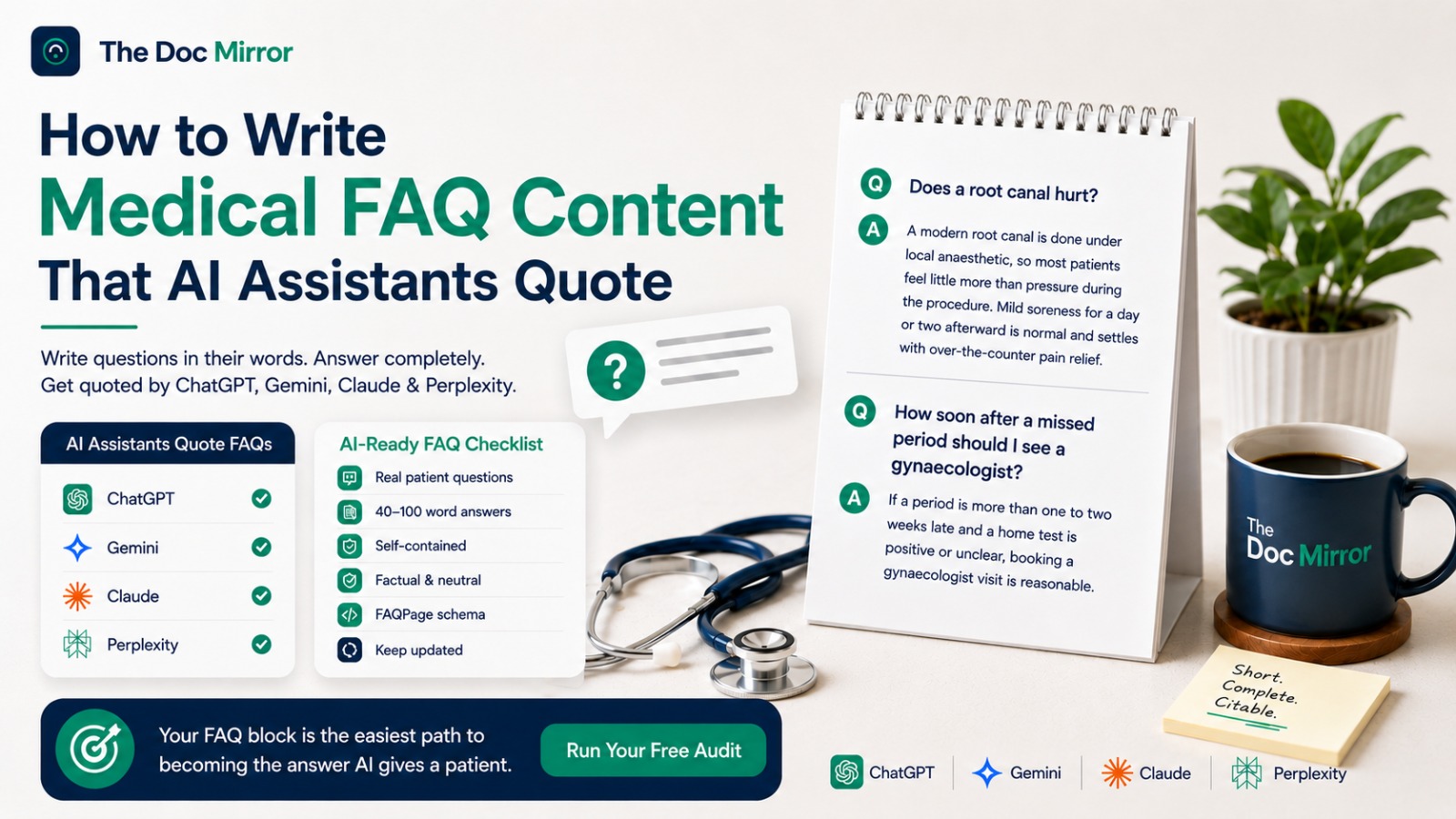
- Make every FAQ answer self-contained. Each answer should make sense with zero surrounding context, in 40 to 100 words, because a model often lifts one Q and A pair whole.
- Cite real statistics with their source. A dermatologist who pairs a claim like "melanoma is highly treatable when caught early" with a specific, correctly cited survival statistic from a credible source gives the model a fact it can trust and attribute.
- Add comparison blocks for decisions. A clear "Option A versus Option B" paired list gives the model a structure it can quote when a patient asks AI to weigh braces against clear aligners.
Structure is how a model decides your passage is safe to repeat.
What most doctors get wrong about AEO
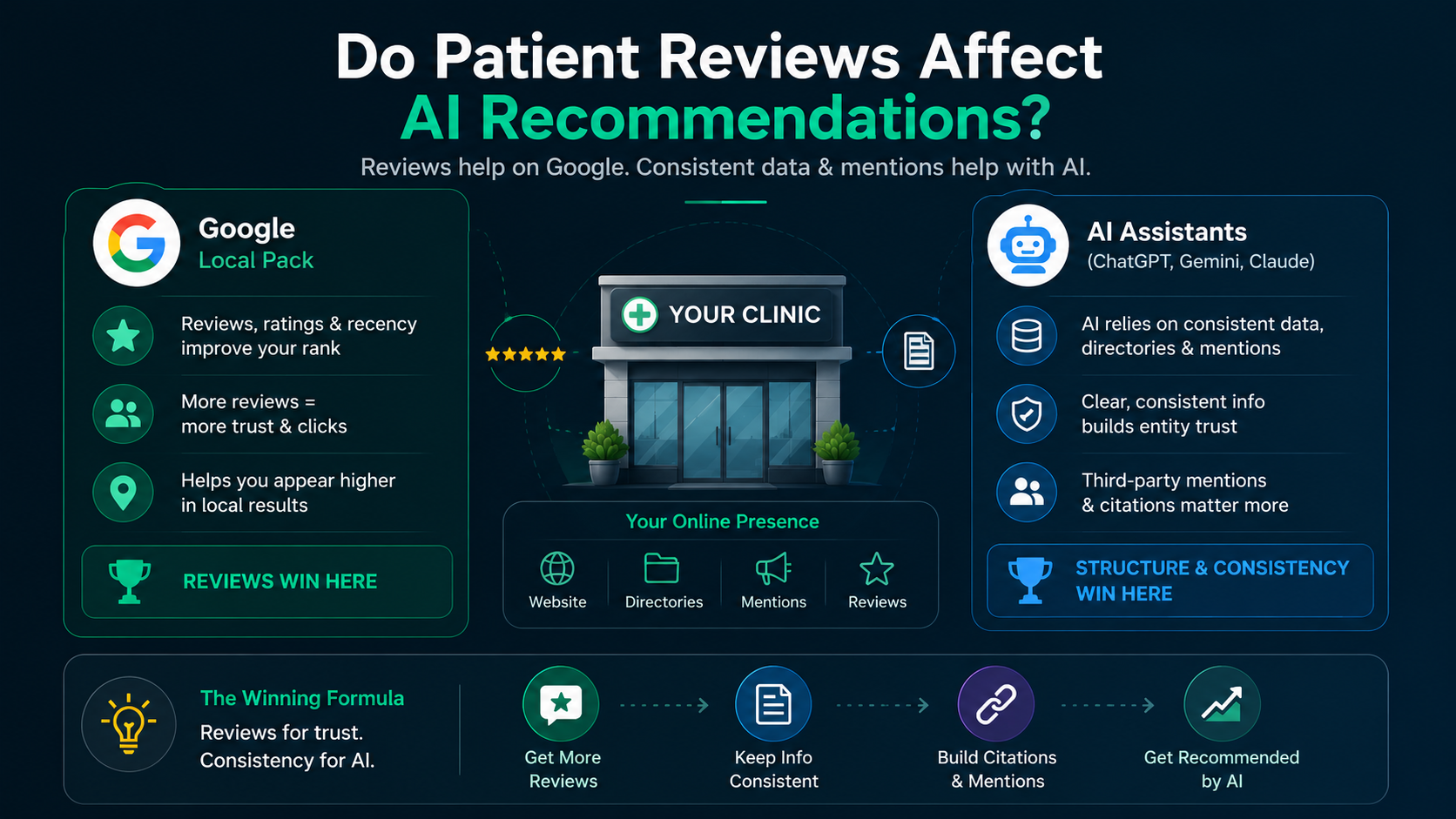
The core error is writing for a human who skims, then assuming a machine reads the same way. Three mistakes cost doctors visibility. First, burying the answer, so a cardiologist's warning-signs page hides its answer in paragraph five where the model never reaches it. Second, vague claims like "many patients benefit," which give a model nothing safe to quote. Third, inconsistent facts, where your website says one thing and your Practo or Healthgrades profile says another. Contradiction makes a model uncertain, and an uncertain model leaves you out, which is why an inconsistent clinic gets left out of AI answers.
For an Indian clinic, this is education, not promotion. You are not advertising, only making your existing, factual information consistent and findable, which sits comfortably within NMC guidance.
How a doctor applies AEO in one afternoon
You do not need a developer to start. AEO is mostly disciplined writing applied to pages you already have.
- Pick your five most important pages: your main service pages and your two most-asked conditions.
- Rewrite the first two sentences of each section so the answer comes first, and turn every "how to" into a numbered list.
- Add a 5 to 7 question FAQ at the bottom of each page, with self-contained answers.
- Make sure your name, specialty, and city appear in the answer text. A dentist in Bengaluru wants "Dr. Anjali, a dentist in Bengaluru" to travel with the answer.
- Reconcile your facts across Google Business Profile, Practo, JustDial, Zocdoc, and Vitals so nothing contradicts.
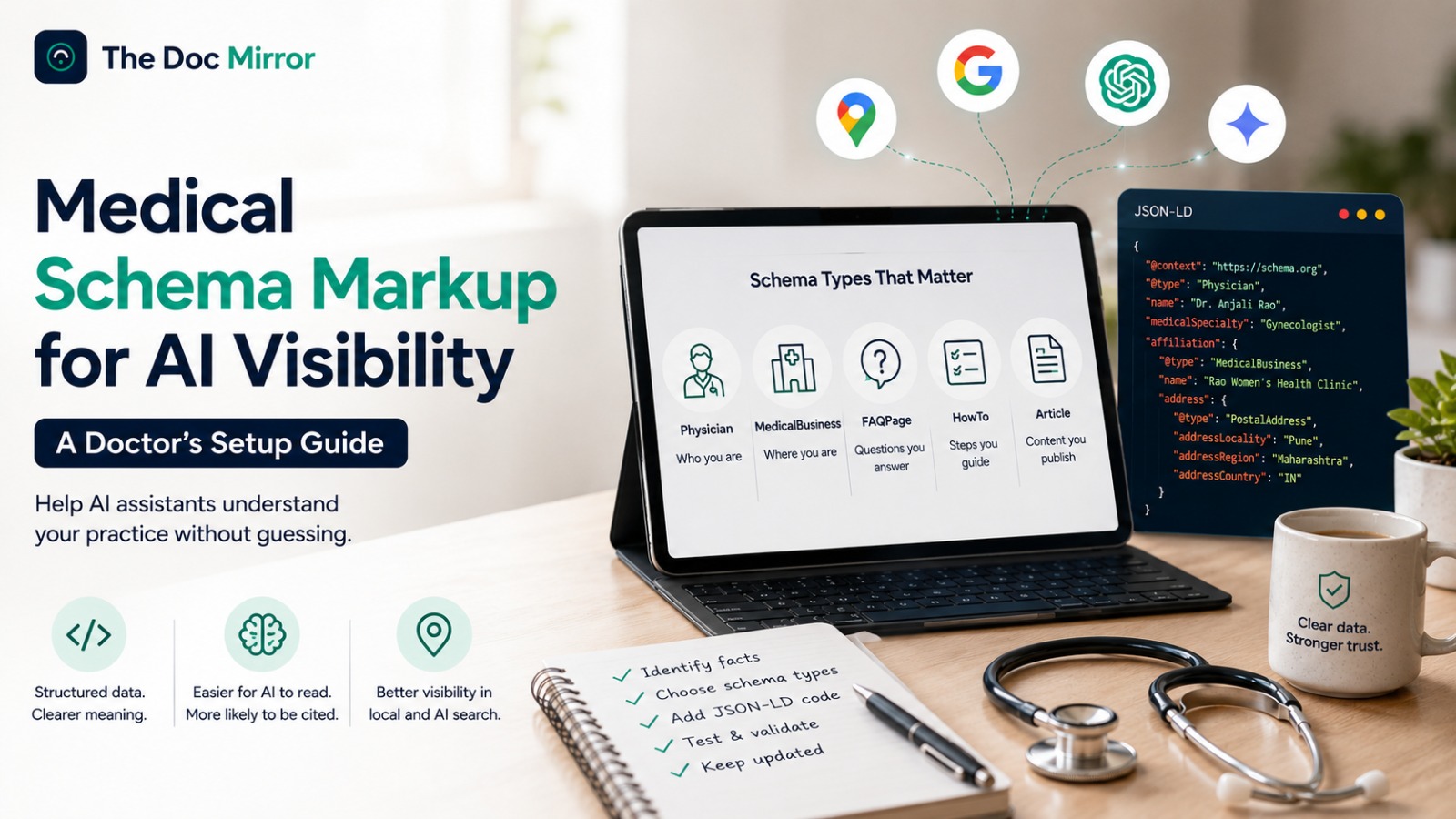
That covers most of the fundamentals. The remaining lift is structured data, which we explain in medical schema markup for AI. For the wider picture, start with our AI visibility for doctors overview.
How to know if your AEO is working
Ask the answer engines directly. Put the questions a patient would ask in your city and specialty to ChatGPT, Gemini, Claude, and Perplexity, then note whether you appear and whether your name, location, and facts come through. Do this monthly, because the answers shift as models update. The Doc Mirror automates this: your visibility score across the 7 pillars shows where your content is extractable and where it is being skipped.
Patients are asking AI about your specialty right now, in your city, whether or not your content is ready to be quoted. AEO is how you make sure the answer they get is accurate and carries your name.
Run your Free Audit at thedocmirror.com. It checks you across Google, ChatGPT, Gemini, Claude, Perplexity, and 6 directories, scores you on the 7 pillars, and shows which gaps to close first.