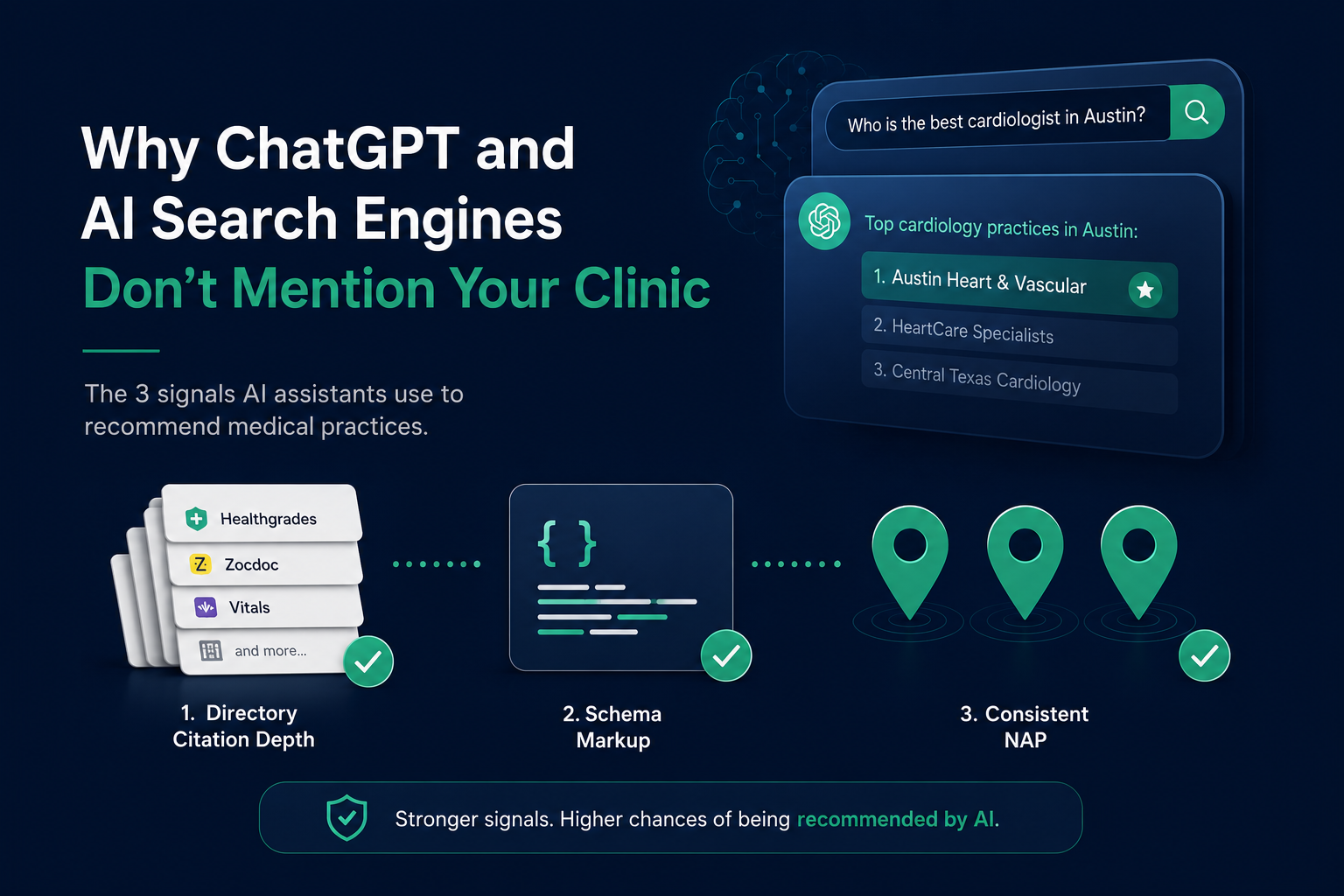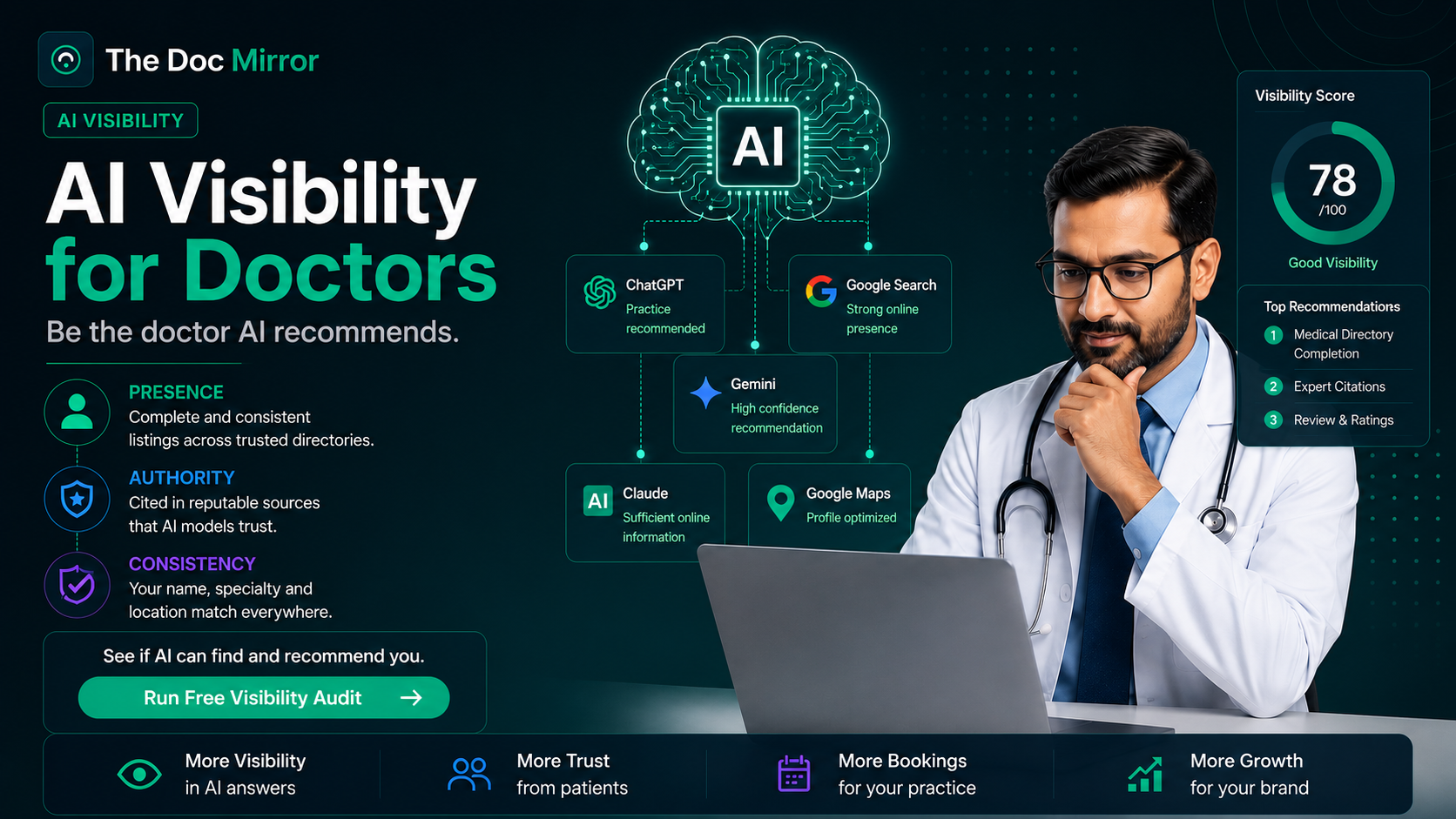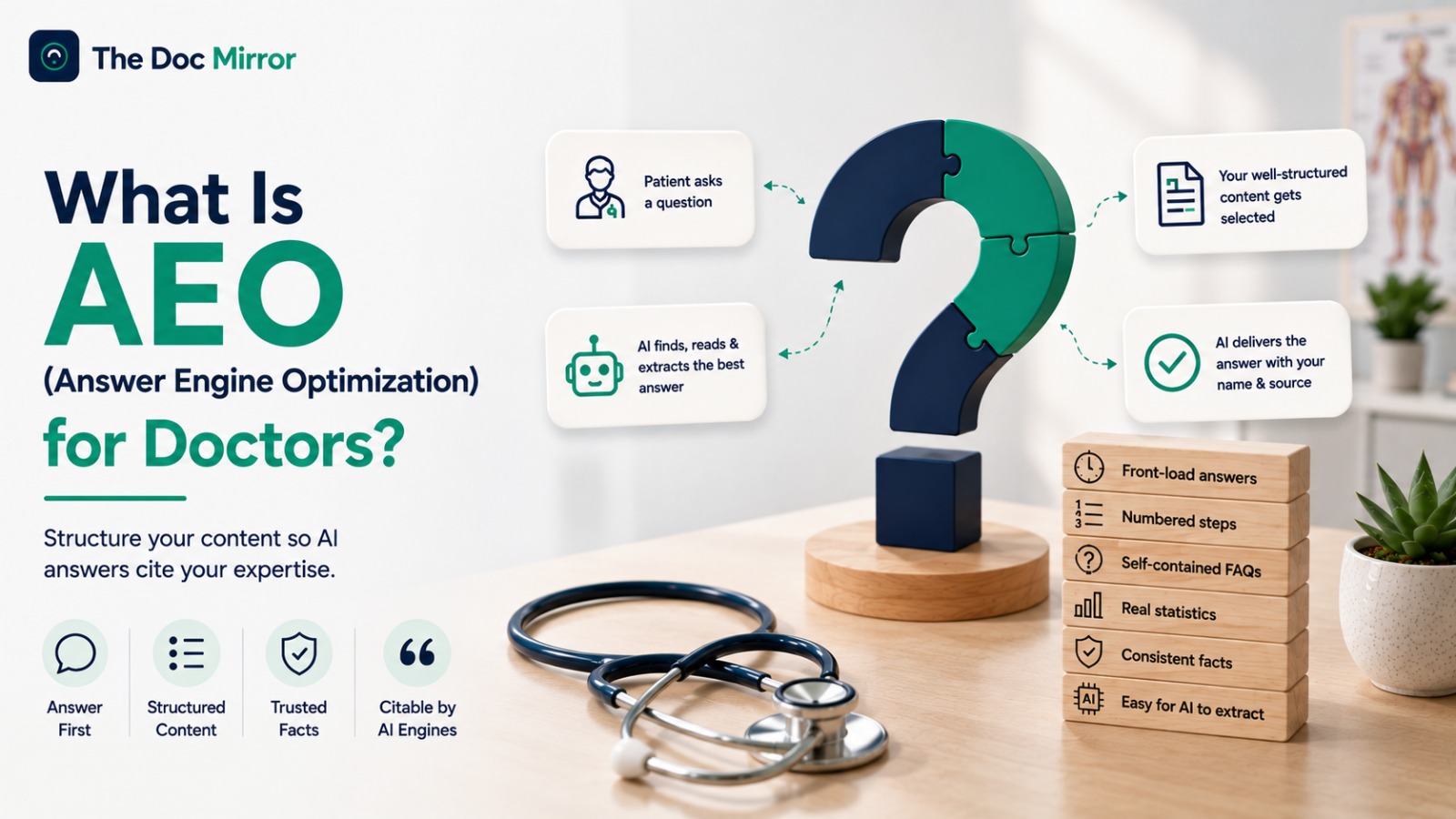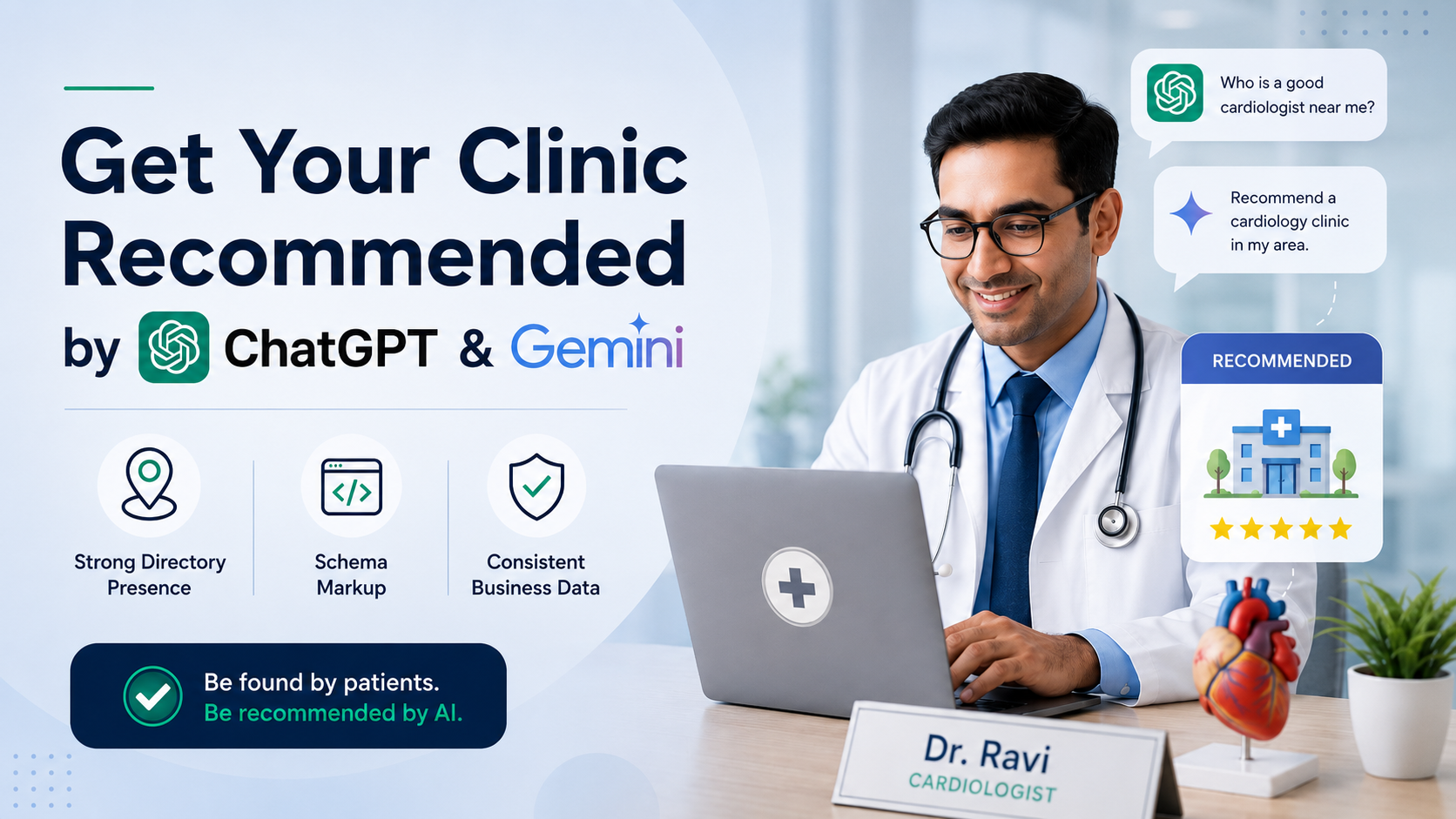
A clinic gets recommended by ChatGPT and Gemini when three conditions are met: the practice is listed with identical name, address, and phone details across six or more medical directories, its website carries schema markup identifying it as a medical practice, and it is mentioned by sources the AI treats as authoritative. Reviews and Google rank help less than most doctors expect. Below is how each signal works and what to do about it.
What does it mean to be "recommended" by an AI assistant?
Being recommended means an AI assistant names your practice, by name, when a patient asks a question like "who is a good cardiologist near me." Unlike Google, which returns a list of links, an AI assistant writes a short answer that usually names one to three practices. If you are not in that short answer, the patient may never see you, even if you rank on Google.
How ChatGPT and Gemini decide which clinics to name
The process runs in five steps:
- The assistant reads the patient's query for specialty, location, and intent.
- It searches its training data and, in most cases, live web sources.
- It ranks the sources it finds by how authoritative and consistent they are.
- It extracts practice details from structured data such as directory listings and schema.
- It writes an answer naming the one to three practices it is most confident about.
The practices it is most confident about are the ones whose details it can confirm in several places at once.
The 3 things that make a clinic recommendable
1. Directory citation depth
List your practice on at least six medical directories with identical details. For US practices that means Healthgrades, Zocdoc, Vitals, your hospital affiliation pages, your specialty board directory, and your Google Business Profile. Matching details across all of them is what builds AI confidence.
2. Schema markup on your website
Add MedicalBusiness or Physician schema to your site. This is a small block of code listing your specialty, address, hours, and credentials. It helps the assistant identify you as a cardiology practice rather than an unlabelled address, and it usually moves a visibility score by 3 to 5 points.
3. Consistent business data everywhere
Your name, address, and phone should read identically across every listing. One old suite number on two directories is enough to lower the assistant's confidence in the whole record.
What most doctors get wrong about AI recommendations
Most doctors believe reviews decide the outcome. Reviews help the Google local pack, but for AI recommendations, directory consistency and schema appear to carry more weight. A practice with 380 reviews and thin directory data can be absent from AI answers, while a smaller practice with clean listings on eight directories gets named.
How to check and improve your AI visibility this week
- Ask ChatGPT and Gemini for the best cardiologist in your city. Note whether you appear.
- Count the directories that list your practice with matching details. Aim for six or more.
- Check your website source for schema markup. Add it if it is missing.
- Fix any inconsistent name, address, or phone details across listings.
For the full picture, the Free Audit at thedocmirror.com runs your practice against ChatGPT, Gemini, Claude, and Perplexity, scores you on 7 pillars, and shows which fixes to make first. It takes about 90 seconds.