For most practices, Google is still the single biggest source of new patients. But "ranking on Google" for a doctor is really two systems working together: organic Search and the Maps / local pack.
The two surfaces that matter
Google Search
The classic blue links. For a doctor, this is your website, your directory profiles, and any articles that mention you. Structured data and strong content help here.
Google Maps & the local pack
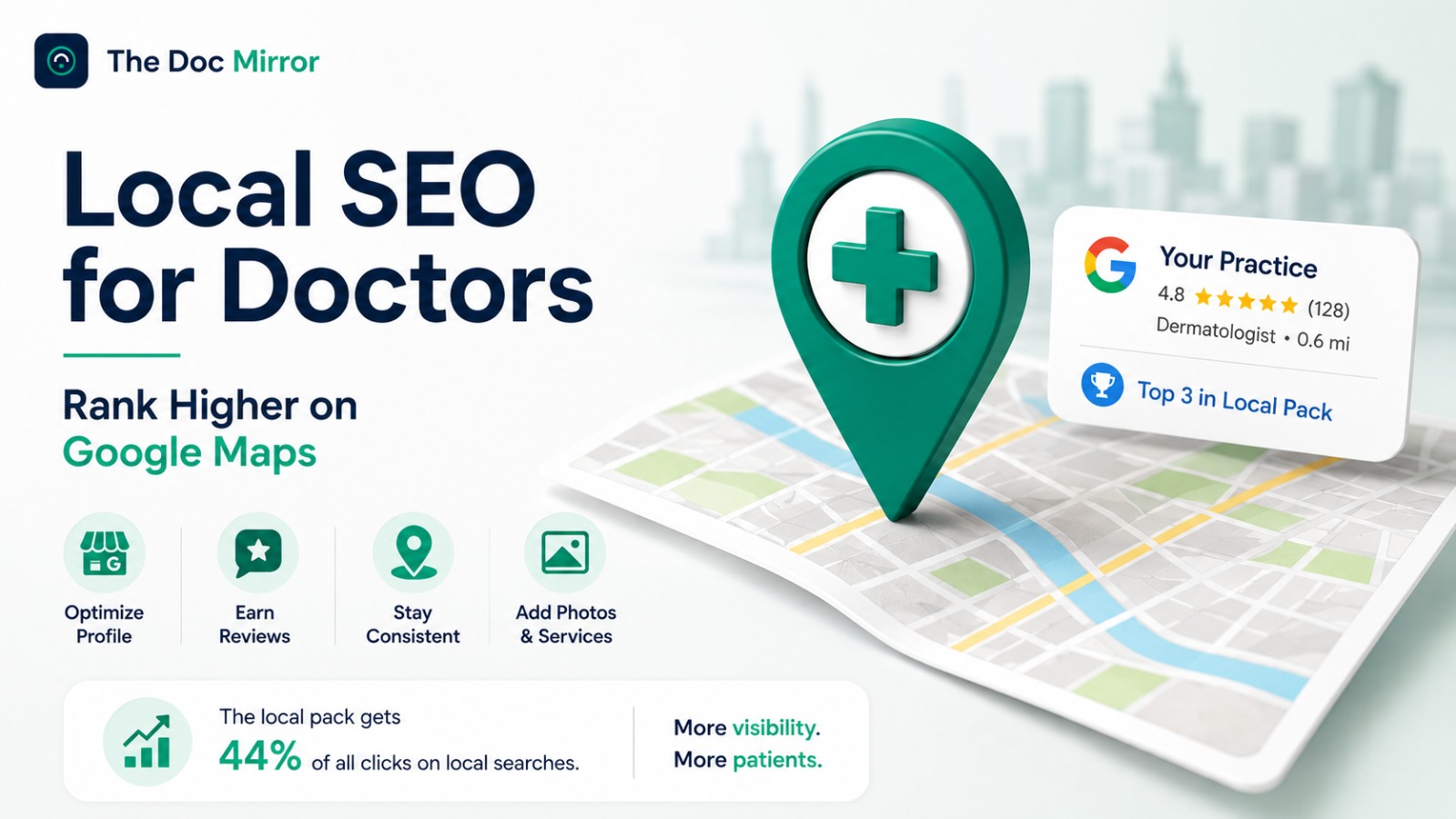
The map with three highlighted businesses that appears for "dentist near me". This is driven by your Google Business Profile, reviews, and proximity to the searcher.
The local ranking signals
Google has been fairly open that the local pack is driven by three factors:
| Factor | What it means |
|---|---|
| Relevance | How well your profile matches the search |
| Distance | How close you are to the searcher |
| Prominence | How well-known and well-reviewed you are |
You cannot change distance — but relevance and prominence are entirely within your control.
A prioritized checklist
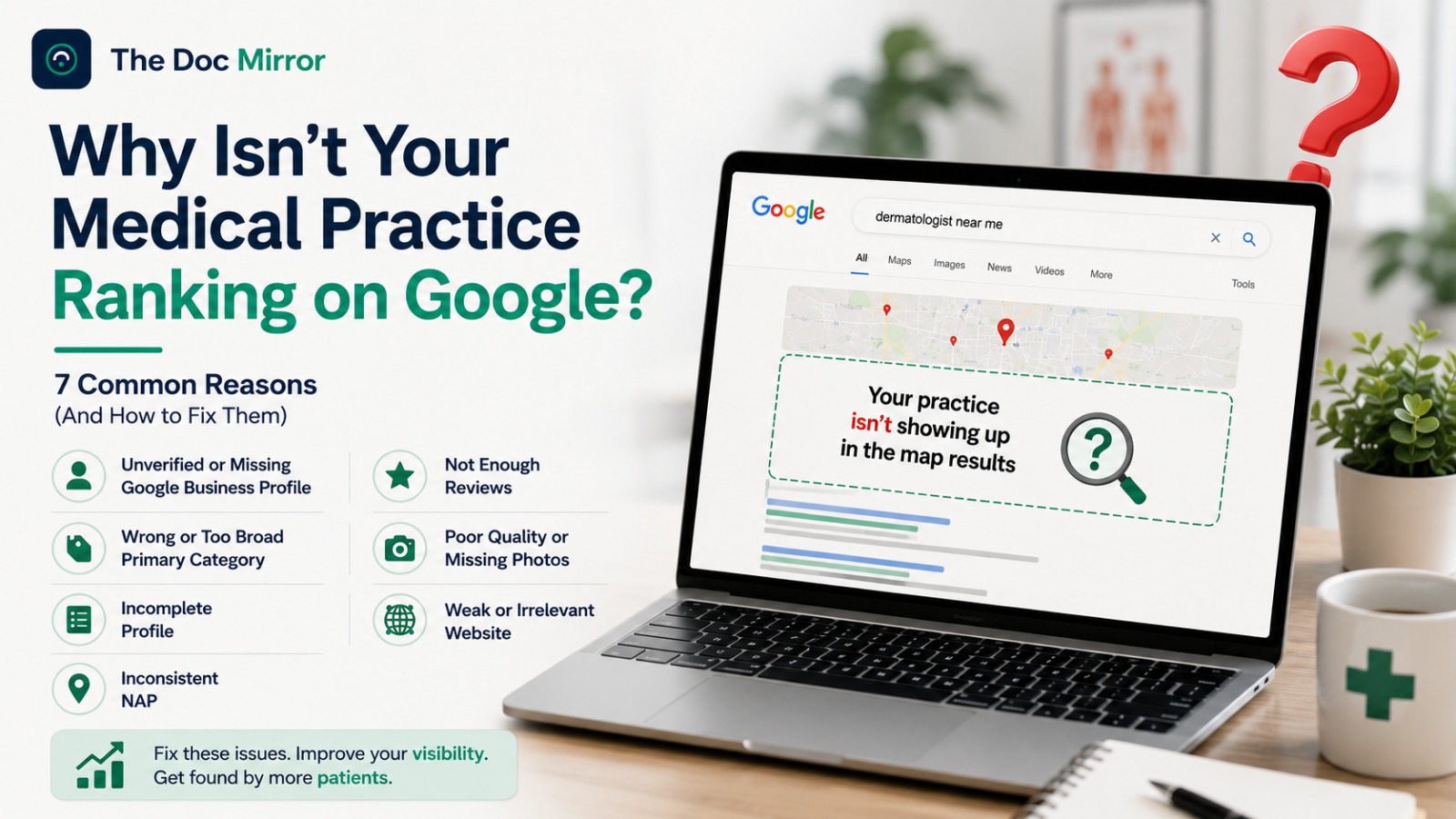
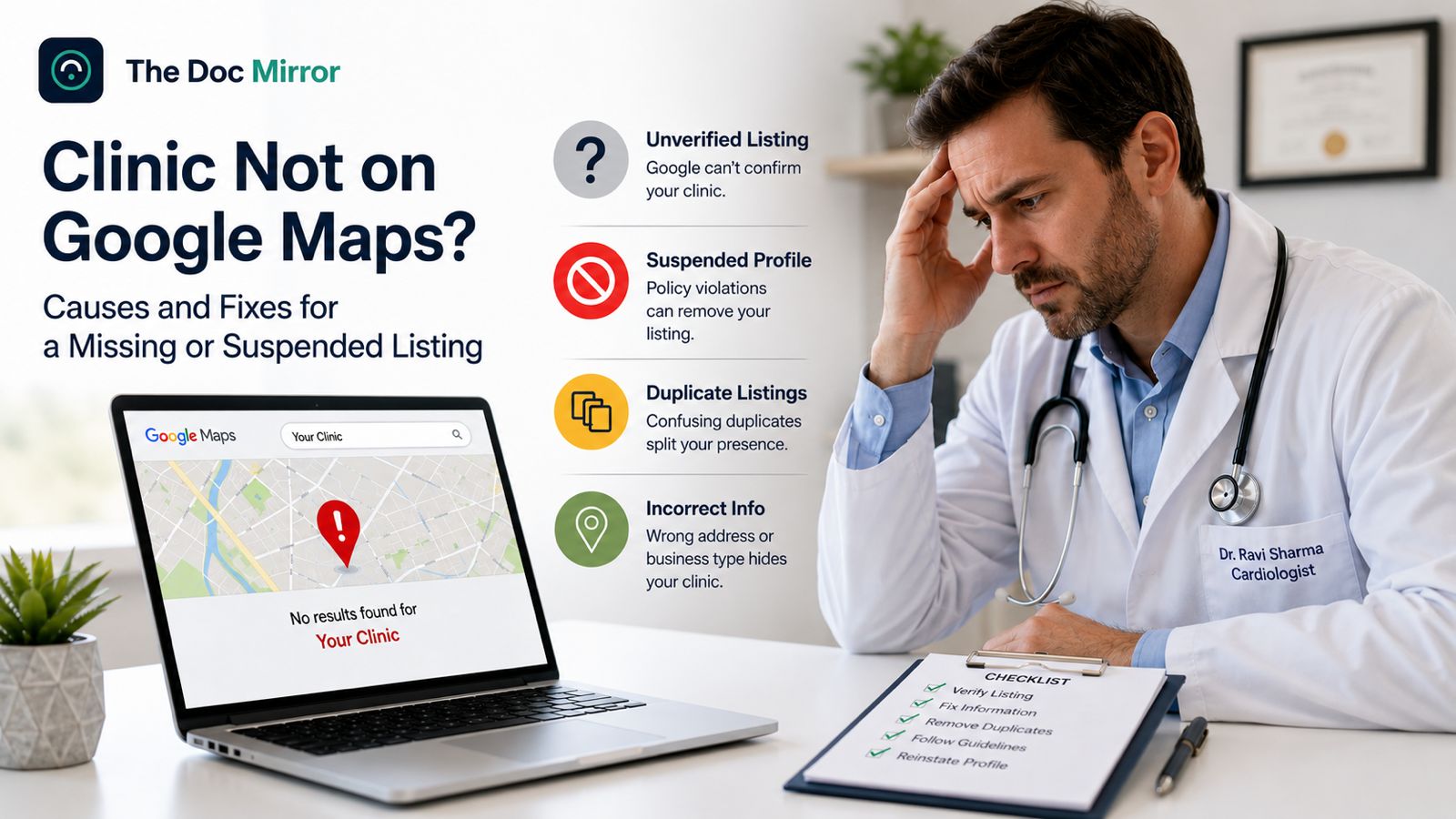
- Claim and fully complete your Google Business Profile
- Choose the most specific primary category for your specialty
- Add photos, hours, services, and insurance accepted
- Ask satisfied patients for reviews — and reply to every one
- Keep your name, address, and phone identical everywhere (NAP consistency)
- Add
MedicalOrganizationstructured data to your website
Prominence compounds. A steady trickle of fresh, replied-to reviews beats a one-time burst every time.
How The Doc Mirror helps
The Doc Mirror audits both surfaces at once — your organic Search footprint and your Maps presence — and shows you exactly which signals are holding you back, ranked by impact.