How Doctors Get Cited by Claude, Anthropic's AI Assistant
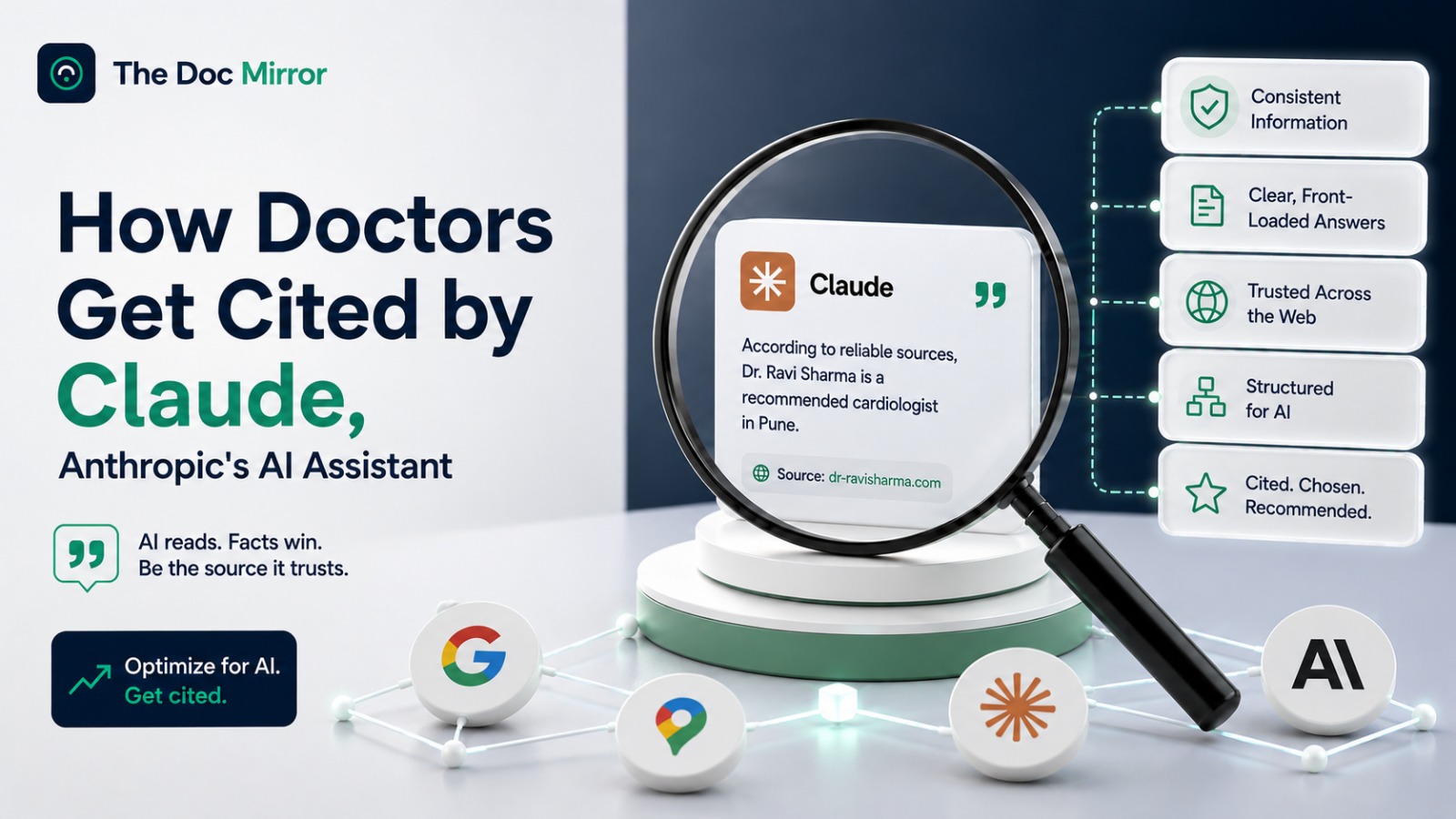
Claude, Anthropic's AI assistant, cites doctors when their information is clean, consistent, and directly quotable across the open web. Understanding Claude AI for doctors starts with one fact: Claude does not rank you the way Google does. It reads sources, extracts the clearest self-contained answer, and names or links the practices whose facts are unambiguous. If a patient asks Claude for a paediatric dermatologist in Austin or a cardiologist in Pune, the practices with corroborated, structured, front-loaded information are the ones it can safely surface.
What is a Claude citation
A Claude citation is when the assistant names your practice, links your page, or repeats your factual details in an answer to a patient's question. Anthropic's Claude, especially in its search-connected mode, retrieves live web content, weighs how trustworthy and consistent it is, then quotes or attributes the source it can stand behind. Being cited means Claude treats your website, profile, or directory listing as the authoritative answer.
This matters because patients are already asking. A KFF poll found about 1 in 3 US adults have used AI chatbots for health information, roughly the same share who use social media for health. The assistant answering them decides which names come up.
How Claude retrieves and chooses sources
Claude's process is different from a search ranking. It reads for clarity and corroboration, not keyword relevance. Claude favours a source when:
- The answer is stated plainly and early, so it can be extracted without guesswork.
- The same fact (your name, specialty, city, credentials) appears consistently across several independent places.
- The page is structured with clear headings, definitions, and question-style sections.
- The claims are verifiable and cautious, matching how a careful clinician actually writes.
- The source reads like genuine expertise, not thin marketing copy.
The third and fifth points are where most practices lose. Claude is trained to avoid confident-sounding but unsupported claims. A page that stays factual and cites its basis is easier for the assistant to trust and repeat.
What "citation-worthy" content looks like
Citation-worthy content is content Claude can lift a clean, correct sentence from without adding risk. This is the core of AEO, or Answer Engine Optimization, which means structuring content so an AI can extract a direct answer. It sits alongside GEO, or Generative Engine Optimization, the broader practice of shaping how generative engines represent you. The patterns Claude extracts most cleanly are specific:
- Front-loaded answers. State the answer in the first sentence of a section, then explain. Do not bury it under three paragraphs of setup.
- Definition blocks. A plain "What is X" line that defines your service, procedure, or condition focus in one or two sentences.
- Self-contained FAQ answers. Each answer should make sense alone, in 40 to 100 words, without the reader needing the question's context.
- Consistent entity facts. Your legal practice name, specialty, address, and credentials worded the same way everywhere.
A GEO research paper from teams at Princeton, Georgia Tech, the Allen Institute for AI, and IIT Delhi found that content choices like these can raise how often a source is cited in AI answers by up to 40%. The structure is not cosmetic. It changes whether you get named.
Why corroboration decides Claude doctor recommendations
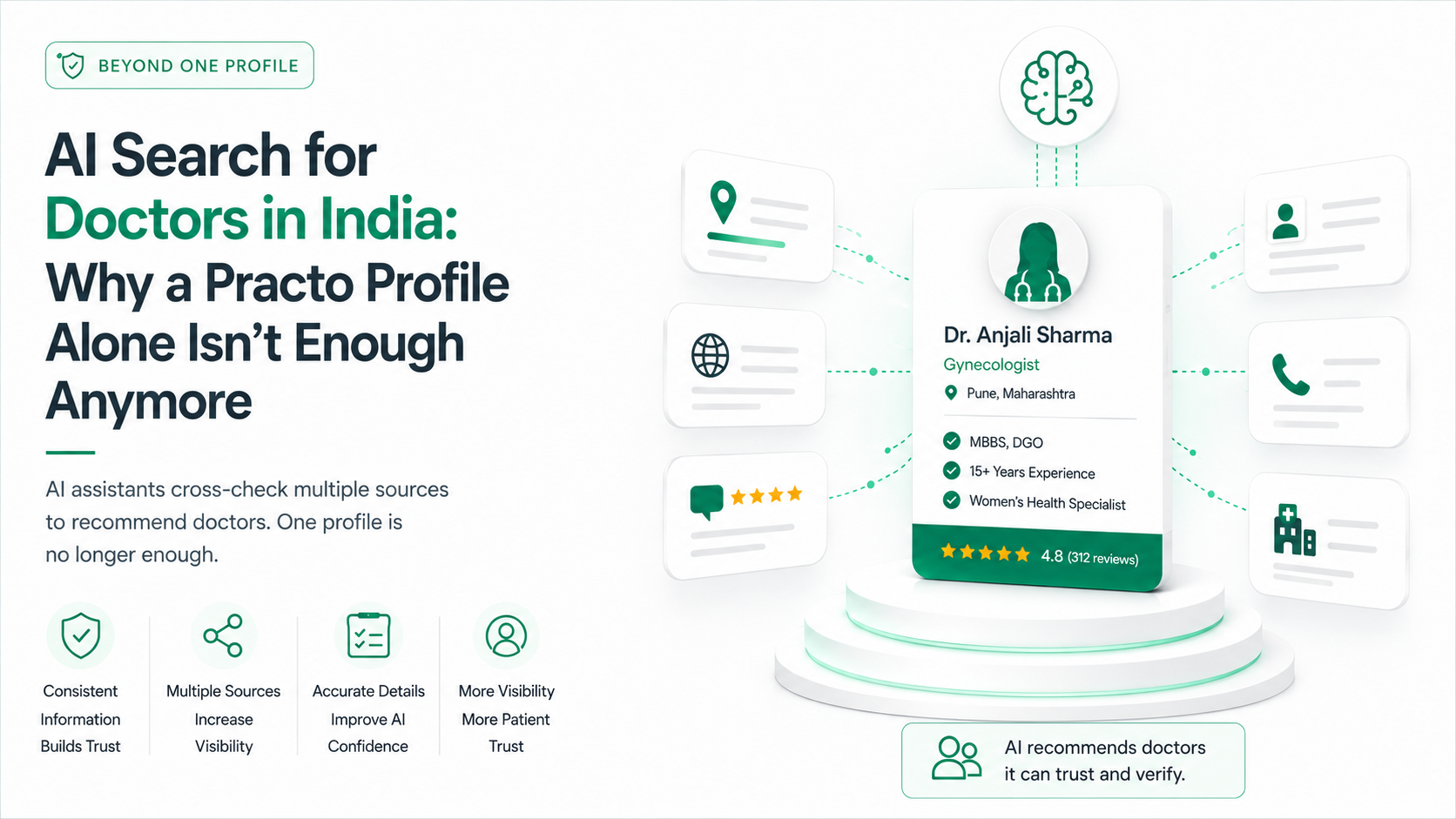
Claude will not confidently recommend a doctor it can only verify in one place. Corroboration is the signal that turns a mention into a citation. When your name, specialty, and city match across your website, your Google Business Profile, and independent directories, Claude treats the fact as settled.
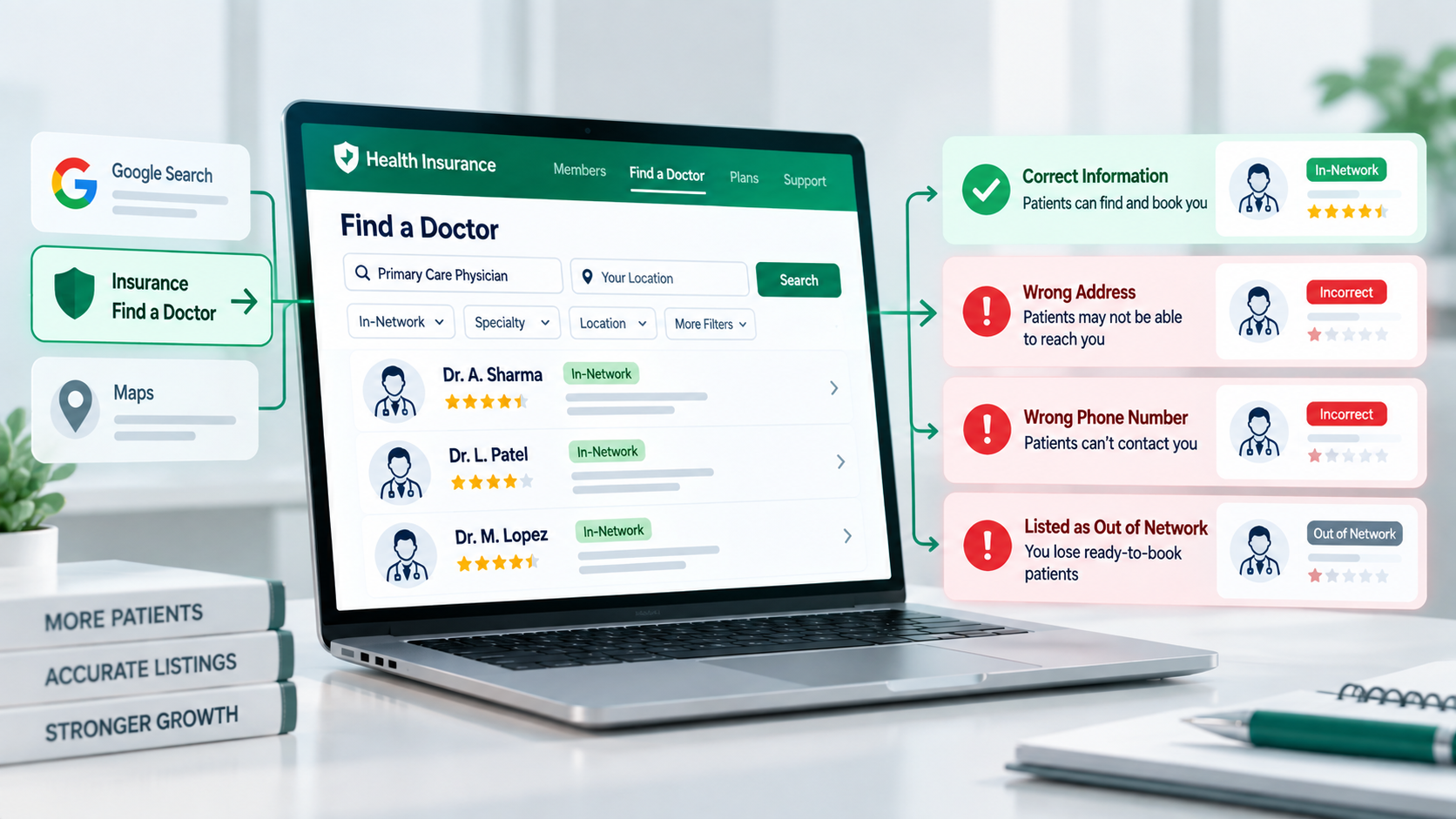
For a US dermatologist, that means your details align across your site, Healthgrades, Zocdoc, Vitals, and WebMD. For a clinic owner in Mumbai or Bengaluru, it means your factual information is consistent across Practo, JustDial, Lybrate, and Apollo 247. This is not about advertising. Under NMC rules, doctors in India should not solicit. It is about making your existing, factual information consistent and findable so an assistant can confirm it.
One mismatched address or an outdated specialty is enough to make Claude hedge or skip you.
What most doctors get wrong about Claude
Most doctors assume that ranking on Google means Claude will find them too. It does not work that way. Claude reads for extractability and trust, so a page that ranks on keywords can still be unquotable if the answer is buried or the facts conflict across the web.
The three most common mistakes:
- Writing for search engines, not for extraction. Long, keyword-stuffed intros with no clear answer give Claude nothing clean to quote.
- Ignoring cross-source consistency. A practice name on the website that differs from the directory listing breaks corroboration.
- Thin or promotional bios. Claude down-weights sources that read like advertising and up-weights genuine, specific expertise. This is E-E-A-T, meaning Experience, Expertise, Authoritativeness, and Trust, in practice.
If you want the fuller mechanics, our guide to AEO for doctors breaks down the extraction patterns, and entity SEO for doctors covers the consistency work Claude relies on.
How to become citation-worthy for Claude
You do not need to publish more. Rewrite the first sentence of each key page to answer the patient's question directly, add a short "What is [your focus]" definition line, build a FAQ where every answer stands alone, and make your name, specialty, city, and credentials identical across your website, Google Business Profile, and the main directories in your market.
The impact compounds. A rater8 2025 report found 26% of patients said an AI tool influenced their choice of provider, and 73% adopted a new way to research providers in the past year. Being the practice Claude can safely name is a direct line to those patients.