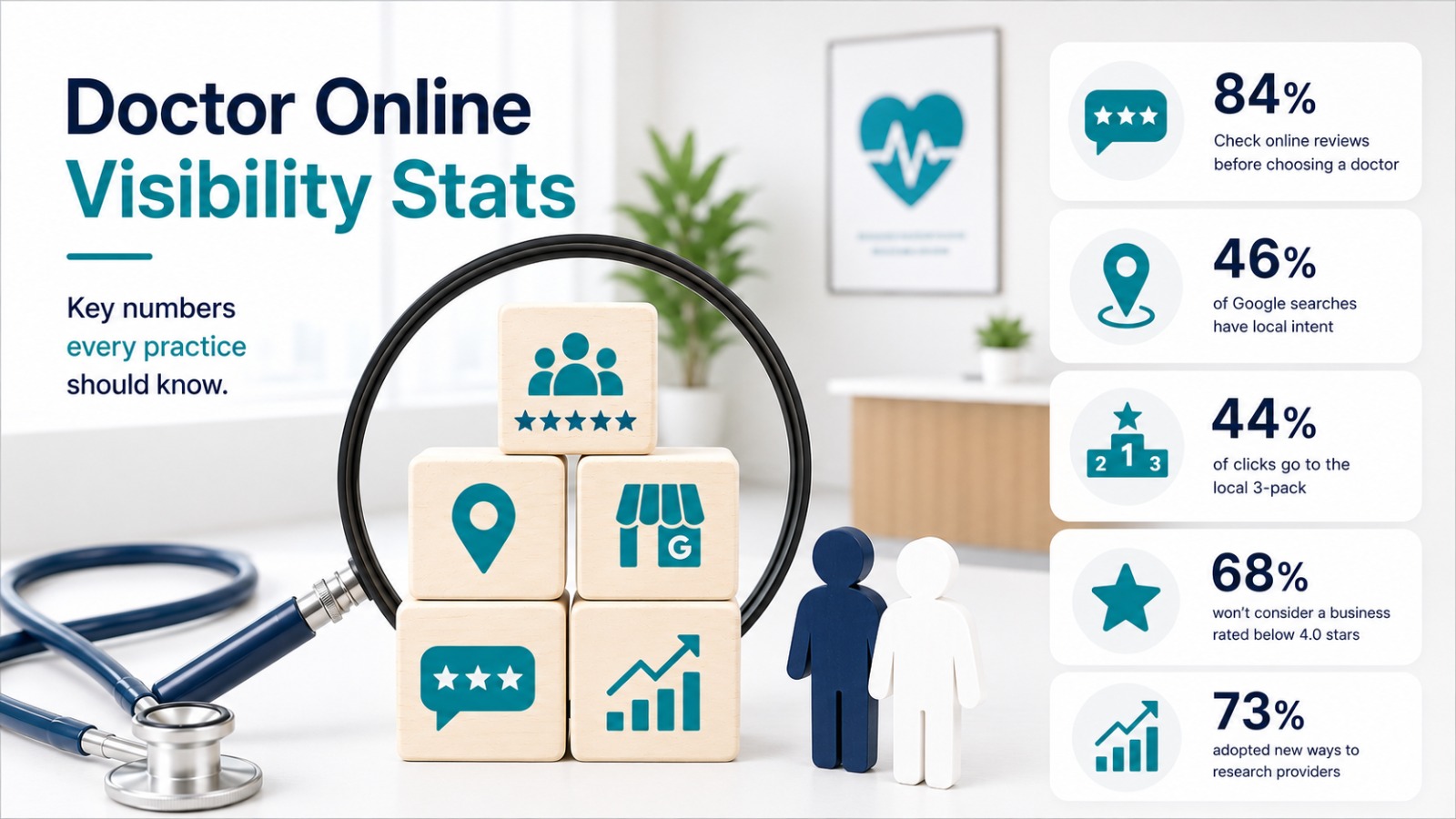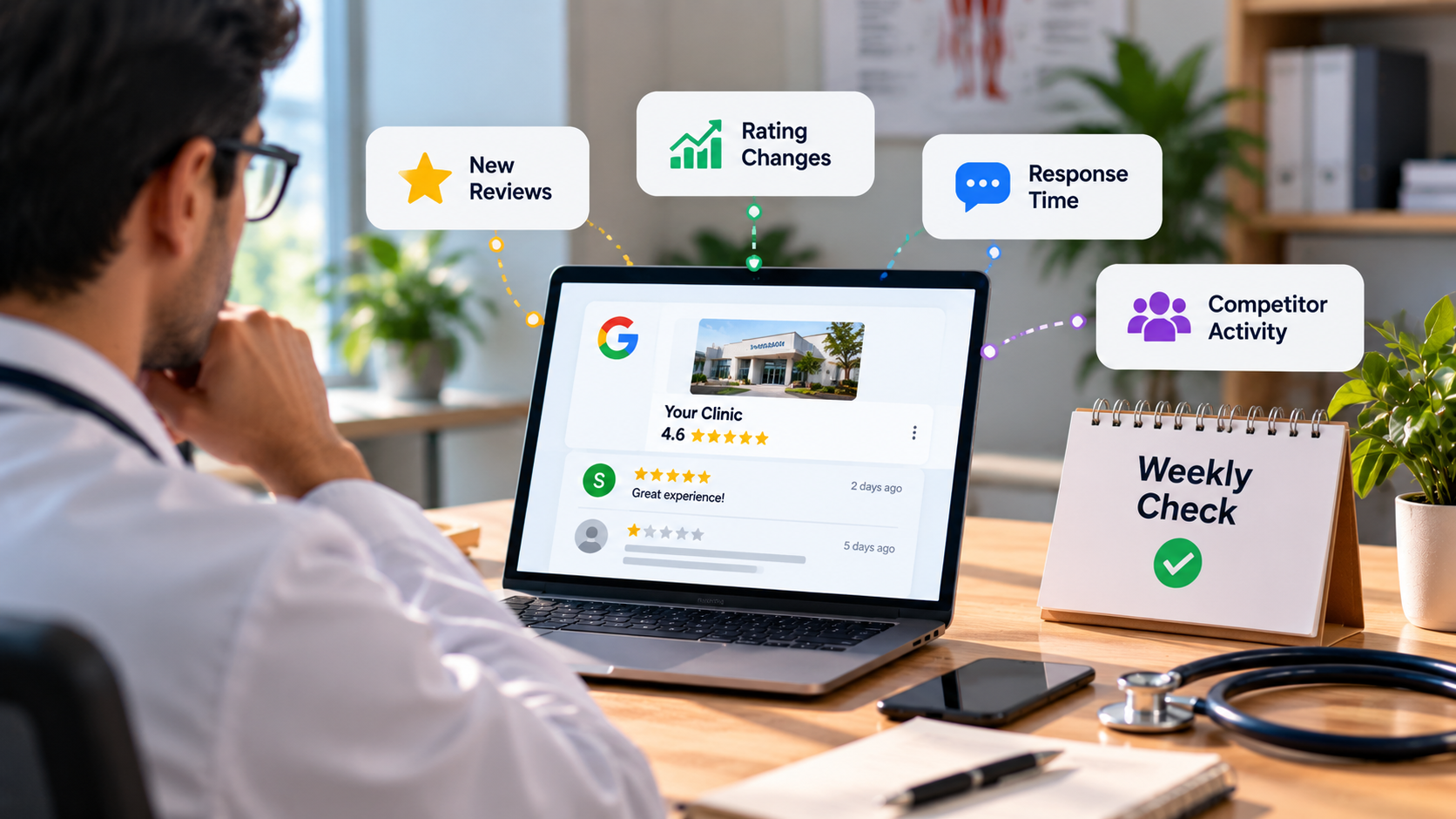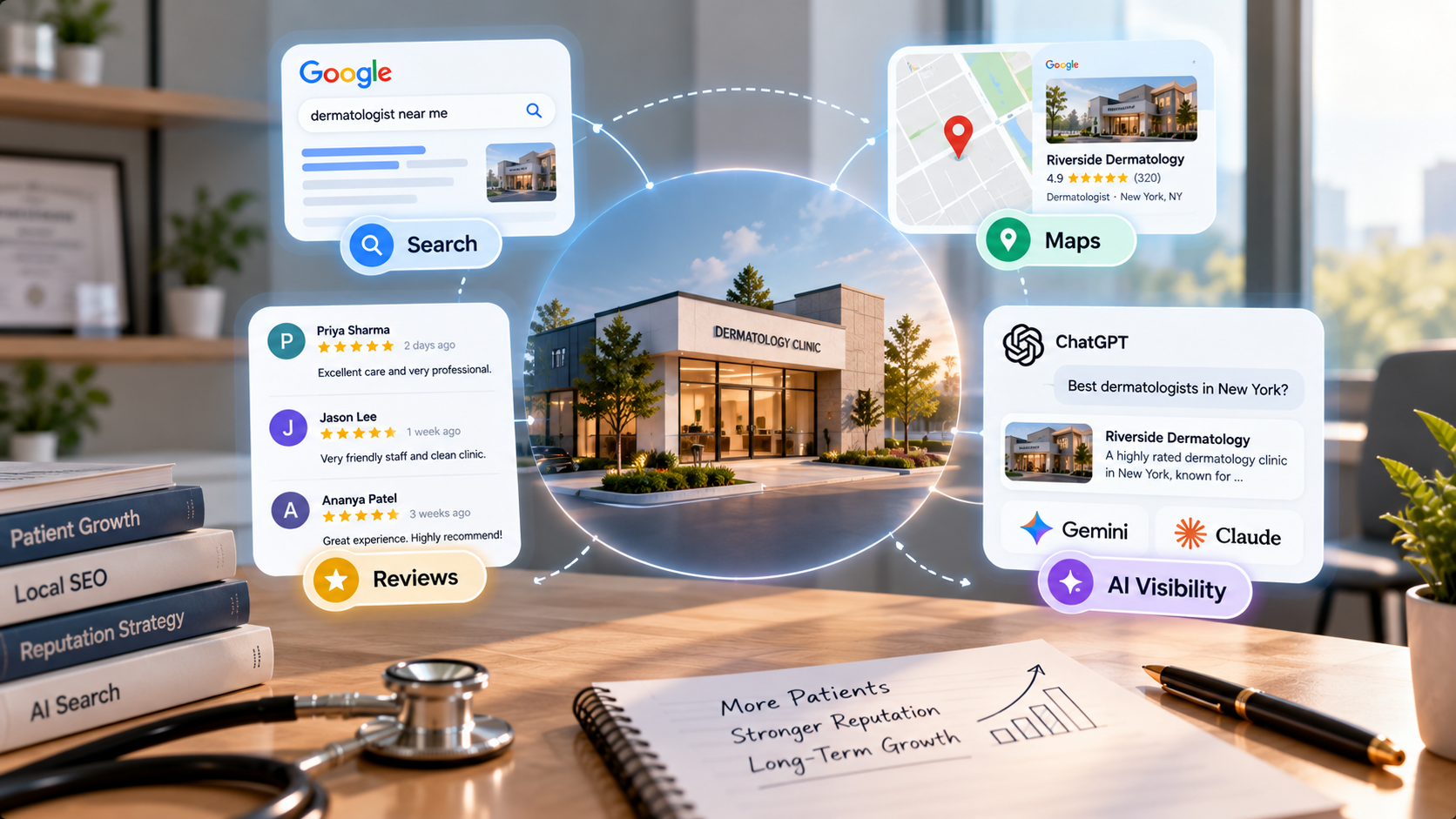
Doctor online visibility is how easily a patient can find and choose you when they search for care, across Google, medical directories, and AI assistants like ChatGPT and Gemini. It is not advertising and it is not a website. It is the sum of every signal a patient sees before they ever call your office: your Google Business Profile, your reviews, your rating, your photos, your directory listings, and whether an AI assistant names you at all. This guide explains what online visibility means for an independent US practice, why it decides who books, and how to measure yours this week.
What "online visibility" actually means for a doctor
Online visibility is the answer to a simple question: when a patient in your city searches for your specialty, do they find you, and does what they find make them choose you? Most doctors assume the answer is yes. Most have not looked in months.
There are two parts to it. The first is being found at all: appearing in Google's local results, in the directories patients trust, and in AI answers. The second is being chosen once found: a complete profile, a strong rating, recent reviews, and clear photos. A doctor can be visible and still lose the patient if the profile next to theirs looks more credible.
Why online visibility decides who gets the patient
A patient searching for a dermatologist in your city rarely knows any of the names. They compare what is in front of them and pick within a minute or two. That comparison happens entirely online, before a single word is exchanged with your staff.
The doctor who is easier to find and easier to trust wins the booking, even when the other doctor is more experienced. A specialist with 47 reviews, complete hours, and recent photos gets chosen over one with 12 reviews and no photos, every time. The patient never learns what they missed, and you never learn you lost them.
The channels where your visibility is decided
Visibility is not one thing in one place. It is spread across several channels a patient moves through without thinking.
- Google Search and Google Maps: the local pack, meaning the three listings shown with a map for searches like "pediatrician near me," is where most patients decide.
- Your Google Business Profile: the information card showing your rating, reviews, photos, hours, and website. It is the single most viewed thing about your practice.
- Medical directories: Healthgrades, Zocdoc, Vitals, and WebMD, where patients cross-check a name they just found.
- AI assistants: ChatGPT, Gemini, Claude, and Perplexity now name specific practices when a patient asks for a recommendation.
That last channel is the one most doctors have never considered. It matters now, not in some future version of search.
AI assistants are now part of your visibility
When a patient asks ChatGPT for "a good cardiologist in Austin," it does not return ten blue links. It writes a short answer naming one to three practices. If you are not in that answer, the patient may never see you, even if you rank on the first page of Google.
AI assistants do not read Google's rankings. They pull from training data, live web results, and sources they treat as authoritative, then name the practices whose details they can confirm in several places at once. This is why a practice can rank well on Google and still be absent from the AI answer. AI visibility is a separate scoreboard, and it is already influencing which doctor a patient calls.
Visibility is measurable, not a matter of opinion
The most useful thing to understand as a beginner is that online visibility is a number, not a feeling. It can be measured, broken into parts, and improved one part at a time.
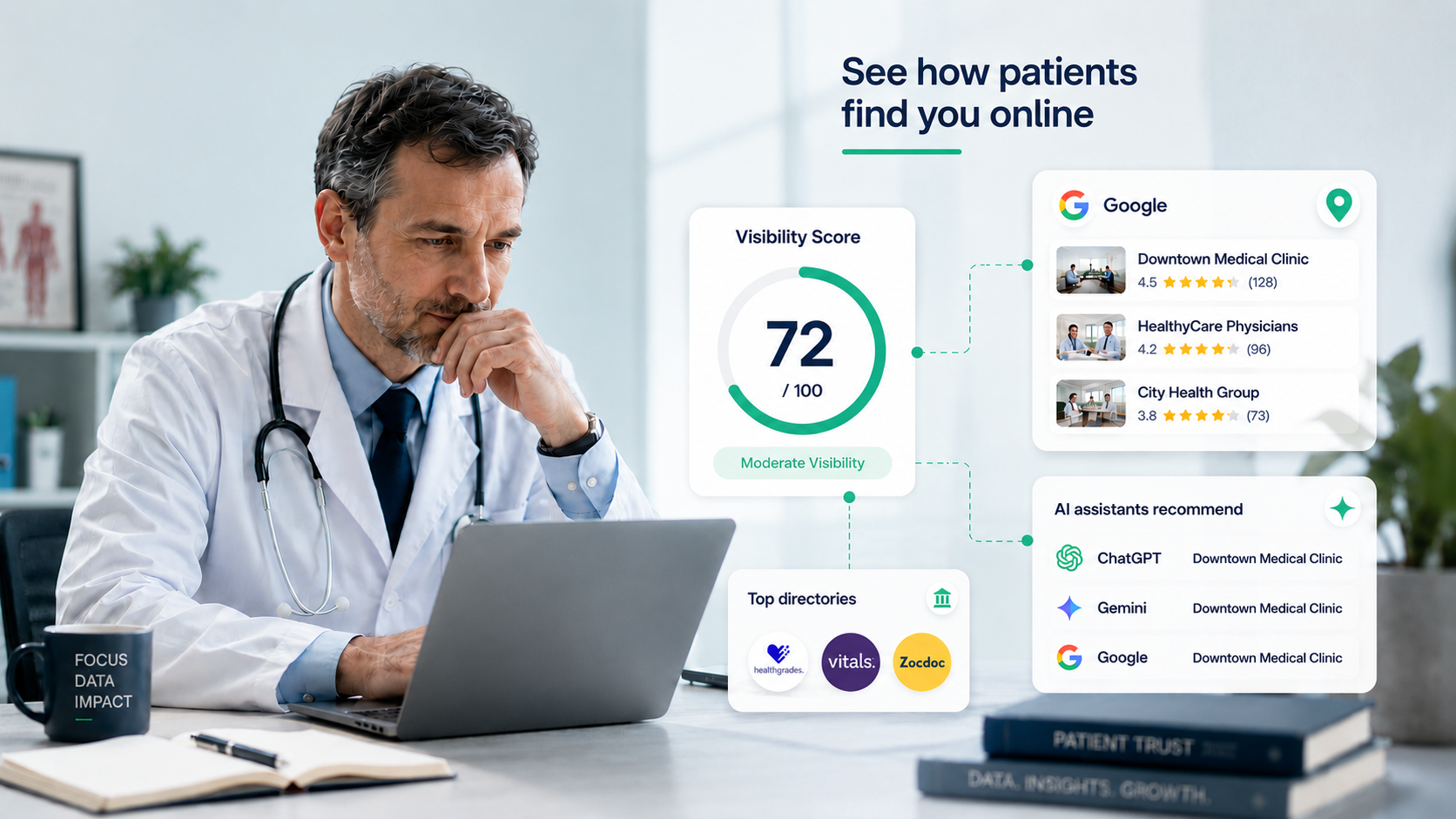
The Doc Mirror scores a practice across 7 pillars on a scale of 0 to 100:
- Google Business Profile: how complete your profile is.
- Rating: your star rating out of 5.
- Reviews: how many patient reviews you have.
- Photos: how many photos are on your profile.
- Local Rank: where you sit in local search results.
- AI Visibility: whether AI assistants surface your practice.
- Directories: how many trusted directories list you consistently.
Each pillar is a number and a specific fix. Your total maps to one of four verdicts: Strong Visibility (85 to 100), Moderate Visibility (70 to 84), Needs Attention (50 to 69), and Critical Gaps (0 to 49). That structure turns a vague worry into a task list you can work through in under 2 hours a week, without an agency.
How to check where you stand this week
You do not need to pay anyone to get a first read on your visibility.
- Open an incognito window and search your specialty plus your city, for example "dermatologist in Denver." Note whether you appear in the top three map results.
- Search your own name and open your Google Business Profile. Count your reviews and photos, and confirm your hours and address are current.
- Ask ChatGPT and Gemini for the best doctor in your specialty in your city. Note whether you are named, and which competitors are.
- Search your name on Healthgrades and Zocdoc. Confirm your details match what Google shows exactly.
If any of those turns up a blank, an old address, or a competitor where you expected yourself, you have found your starting point. For the full picture, the Free Audit at thedocmirror.com scores your practice across all 7 pillars in about 90 seconds, with no signup for the free score.